


In the legal industry, trust is the cornerstone. Modern-day clients do not choose law firms based on the services they offer, but they also prioritize credibility, reputation, and how the public perceives them. In the digital world, approximately 70% of consumers turn to the Internet to research their legal issue and find an attorney. This is where incorporating strategic PR for law firms becomes non-negotiable.
PR for lawyers, when implemented correctly, can not only build credibility and enhance online reputation but also secure high-value clients and drive business success in a highly competitive market while maintaining a strong professional image.
Unlike traditional legal marketing, public relations can fortify credibility through leadership and earned recognition. If you are a law firm that is looking to stand out in the saturated market, visibility alone will not help. Positioning your law practice as a reliable expert is the key. So, this blog will offer a complete guide on what lawyer public relations is, how it can be beneficial for lawyers, and effective PR strategies for law firms. So, let’s get started.
What is PR for Law Firms?
Public relations for law firms is the effective management of communication and reputation, especially designed to foster credibility, boost visibility, and build trust among target audiences. This strategy includes earning industry media coverage for law firms, positioning attorneys as experts, dealing with crises, and managing the online reputation of lawyers.
Through the implementation of effective public relations, lawyers can distribute strategic messages that clearly convey the values, skills, and cases of their law firms. The main goal of PR is not to gain publicity; rather, to build credibility.
6 Major Advantages of Public Relations for Law Firms
Now that you have a clear idea of what public relations for attorneys is, let’s take a look at why PR is so important for legal departments:
- Enhancing Law Firm Reputation and Credibility
Public relations can be greatly beneficial for lawyers to secure third-party endorsements through expert commentary and media coverage. As these are “earned” mentions and not “paid,” they are much more valuable in comparison to standard advertisements. Consistent and positive visibility can position your law firm as an authoritative source in the legal industry.
- Helps Establish Media Relations and Gain Coverage
PR, when implemented right, can allow lawyers to foster meaningful, long-term relationships with journalists, broadcast outlets, and legal publications. These connections can help law firms secure features, quotes, and interviews, further enhancing brand awareness and brand visibility for both individual attorneys and legal firms.
- Effectively Manage Crisis Situation
Legal matters are very sensitive and often attract public attention. PR for law firms can help mitigate reputational damage by controlling the narrative, preparing open and transparent messaging, and effectively managing media inquiries during high-stakes or controversial events.
- Builds Thought Leadership in the Industry
By positioning authored articles (bylines), offering expert commentary on trending legal topics, and securing speaking engagements, an experienced PR team can help position attorneys as authoritative subject matter experts. This educational impact builds goodwill and sets your law firm apart from your competitors in the overly saturated market.
- Offers an Advantage Over Competitors
In the highly competitive legal industry, PR can help a law firm stand out by showcasing its unique success story, industry awards, honours, and cultural values. By maintaining a consistent, positive presence, law firms can ensure they remain at the top of mind of their clients and attract top talent graduating from reputable and established law schools.
- Supports Business Growth and Development
By incorporating effective public relations strategies, law firms can ensure long-term growth by generating high-quality leads and attracting high-intent clients who value perceived competence over price. Furthermore, digital PR strategies include obtaining high-quality backlinks from authoritative news sites that can help boost search engine rankings. This can make it even easier for new clients to find your law firm online.
8 Effective PR Strategies Law Firms Must Consider
The legal sector is getting more and more crowded with time, with more than 1.3 million lawyers in the United States. For small-scale law firms and lawyers who have just started their careers, standing out in this highly competitive market can be a huge challenge.
So, public relations has emerged as a crucial tool for law firms to build credibility, boost visibility, and set themselves apart from the competition. Here are 8 PR strategies that law firms can implement:
- Set Up Defined PR Goals and Objectives

To ensure successful PR for law firms, they must determine what they want to achieve through their PR campaigns. Effective public relations for lawyers can significantly improve their business development cycles, boost audience awareness, and initiate rapid growth.
If you proceed with a clear goal in mind and remain committed to your key business goals, it will boost the chances of the success of your PR efforts.
Here are some of the crucial PR goals for lawyers:
- Boost awareness of your law firm and services
- Establish name recognition of your law firm, services, and lawyers.
- Boosting newly launched legal services
- Acquiring prospective clients in a new market segment
- Retaining existing clients
- Gaining media attention regarding a successful legal settlement, verdict, or court finding to shape public opinion.
- Generate more referrals from other attorneys.
With the digitalization of communication, effective public relations can also be used to develop a two-way conversation with your target audience.
- Identify your Target Audience

Through your public relations efforts, who are you willing to attract? They are referred to as your target audience. When targeting them, law firms must make sure to be as precise and accurate as possible.
So, let’s take a quick look at why identifying the target audience matters for law firms:
- Developing Personalized Messaging and Content: Understanding the needs, challenges, and interests of audiences can help law firms to create targeted messages that resonate with audiences on a deeper level.
- Selection of Optimal Platform: Not all audiences use the same platforms. By identifying target audiences successfully, law firms can select the right channels where their potential clients are the most active. For example, lawyers can leverage LinkedIn to attract clients who are looking for corporate lawyers or community forums for personal jury.
- Better Efficiency and ROI: Instead of incorporating broad, expensive marketing techniques, targeted PR can make sure that your marketing efforts are focused on individuals who are most likely seeking legal services.
- Builds Reputation and Credibility: Targeted PR, such as industry-specific whitepapers or focused media pitches, can position your legal practice as an expert leader rather than a generalist. This can foster trust within the exact people who can hire you.
- Higher Client Acquisition and Retention: By clearly assessing existing client data, legal firms can identify prospects with similar needs, leading to gaining higher-quality leads and better retention rates.
- Effective Crisis Management: In case of a crisis, knowing the audience can allow your law firm to directly communicate with major stakeholders in order to protect your reputation, rather than managing a public-wide panic.
Now that you have a clear idea of why identifying your audiences matters, here are a few questions lawyers must ask themselves in order to understand their target audiences:
- Where is my audience? Are they local, regional, national, or global?
- In which industries do my target audiences work?
- Are my target audiences mostly men, women, or both?
- What newspapers do my target audience watch, and which newspapers do they prefer reading?
- Are my target audiences likely to subscribe to blogs, podcasts or other forms of social media?
- What seminars or conferences do my target audience attend?
- What age groups does my target audience belong to?
- What influences my target audiences from seeking legal services?
- What are the needs of my target audiences, and how can I meet them?
When you have the answers to all these questions, it means you now have a clear understanding of who the target audiences are, making it easier to get their attention.
- Frame a Strong Brand Message

When crafting the messaging for your law firm, make sure that it clearly demonstrates the core values and expertise of your law firm. It is not just a way to promote your legal practice, but it is also an exceptional opportunity to tell a story that builds trust and credibility. Below, we will discuss how to create and distribute brand messages effectively for successful PR for law firms:
- A Comprehensive Guide to Crafting and Distributing Your Brand Message
Follow these steps to craft and distribute the key message of your law firm:
Step 1: Structure the Message
- Determine Core Value and Audience: In order to create an effective brand message, legal practices must have a clear idea of their values and audiences. Define the mission of your firm and deeply understand the preferences, pain points, and needs of your audiences.
- The 4 C’s Framework: Make sure the messaging is Clear, Concise, Credible, and Compelling.
- Clearly Define Your USP: By highlighting what exactly sets you apart from the others, you can build a unique position in the market.
- Emotional Appeal: Law firms must develop stories that resonate with the pride, relief, and inspiration of their target audiences.
- Leverage Keywords: By identifying major keywords and phrases, law firms can actually summarize what their practice stands for.
Step 2: Maintain a Consistent Tone
- Maintain Consistency: When it comes to crafting an effective brand message, staying consistent is the key. Rather than employing various tones of messaging on different platforms, lawyers must keep their messaging uniform across all platforms, be it social media sites like Instagram or Facebook, and Google Business Profile. This can be immensely helpful in building trust and credibility within the target audience.
- Incorporate a Conversational Tone: Make sure to use a relatable tone with no complex jargon when developing your firm’s message.
- Develop Supporting Statements: Law firms can use proof points such as testimonials, awards, and recognition in order to support their key brand keywords.
Step 3: Distribute Your Brand Message
- Leverage PR Kits: To successfully distribute your brand message, law firms must use effective public relations kits through which they can provide journalists, media outlets, and influencers with crucial information.
- Use Multiple Channels: Rather than sticking to a single channel to distribute your brand message, lawyers must use various channels, including blogs, infographics, social media, and digital PR to reach a wider segment of the audience.
- Build Local Relationships: By building meaningful relationships with local newspapers, magazines, media outlets, influencers, and law firms, lawyers can ensure their brand message is reaching even local clients.
- Make Use of a Brand Newsroom: By publishing press releases directly in a dedicated brand newsroom on your website, law firms can boost search engine optimization.
Step 4: Assess and Modify
- Test and Iterate: Make sure to constantly evaluate customer feedback and data to ensure your brand message remains relevant.
- Encourage Advocacy: Lawyers must transform their clients into brand advocates through user-generated content.
- Modify your Messages: You must update your messaging strategies according to the audience’s preferences and behaviour shift.
- Position your Founders and Executives as Experts

One of the most effective strategies of PR for law firms is positioning founders or executives as go-to experts in the legal industry.
Leaders of the legal sector and journalists often look for a credible source to cite, and if your team is positioned as a trusted source in the industry, then you are likely to be featured.
- Why Positioning Founders as Industry Experts Matters?
- In highly saturated industries like the legal industry, the unique voice of a founder is non-replicable and can set your law firm apart like no other. It moves your firm from simply providing legal services to driving conversions.
- Regular media coverage showcasing expert insights signals momentum, helping to attract funding, strategic, and meaningful partnerships.
- Journalists prefer interviewing experts rather than marketing spokespersons. This makes them more likely to request input for industry stories.
- High-quality thought leadership articles and media features offer authoritative backlinks, immensely boosting your firm’s search rankings.
- 5 Effective Steps to Position Founders as Thought Leaders
Now, how can law firms establish their lawyers or attorneys as go-to experts in the industry to successfully do PR for law firms? Here is a complete guide for it:
Step 1: Create a Unique Point of View
- Challenge Conventional Wisdom: Rather than offering generic industry commentary, law firms must identify 3-5 core, relevant topics that challenge outdated norms and offer a new perspective on industry trends.
- Emphasize on the “Why Now”: Make sure to develop insights surrounding rapidly shifting markets, latest technology, or changing regulations. This will make the founder’s perspective or point of view appear fresher to the audience.
- Address Problems, Not Solutions: Rather than focusing on pitching their legal services, law firms must focus on the pain points of their clients. This can help position your founders and executives as problem solvers.
Step 2: Implement Data-Driven Thought Leadership
- Conduct Micro-Studies: Law firms must run brief, focused surveys or clearly analyze internal, anonymized data to produce authentic research. This can build instant authority for legal practices.
- “Humanize” Data: Make sure to leverage data to showcase why a particular issue matters, and include the founder’s “human filter” on raw information to make it even more meaningful.
Step 3: Ace Modern Distribution Channels
- Prioritize LinkedIn: If you are offering legal practices to deal with corporate affairs, you can leverage channels like LinkedIn. Engaging in comments, developing thought leadership articles, and posting 3-4 times a week can help build authority.
- Embrace “Founder-First” PR: Make sure to treat LinkedIn as the primary PR channel to demonstrate the personality of your law firm, share the journey of your firm, and connect directly with industry peers rather than waiting for the traditional media to cover you.
- Develop a “5C” Content Framework: When developing and distributing thought leadership across various channels, lawyers or attorneys must focus on Credibility (expertise), “Challenge” (Lessons learned), Culture (industry perceptions), Content (behind-the-scenes), and Character (the personality)
Step 4: Establish Meaningful Relationships with the Media
- Leverage Tools Like HARO and Qwoted: Law firms should actively respond to common journalist queries on platforms like HARO and Quotes to achieve higher media coverage. This can help generate high-quality backlinks and third-party endorsements.
- Engage with Journalists: Rather than simply pitching, law firms must share relevant data with reporters to foster trust. This will increase the likelihood of the reporters calling the founders of your law firm when a groundbreaking story breaks in the legal sector.
- Secure Podcast Guest Spots: Law firms must engage or appear on relevant, niche-specific podcasts, which can offer a more personal and human voice to industry topics. For example, if you are a family lawyer, you can engage in child-focused podcasts or divorce or separation podcasts.
Step 5: Leverage Owned Media to Gain Maximum Control
- Introduce a Subtrack/Newsletter: By leveraging Subtrack or Beehiive, law firms can share deep, original insights, which can allow the founders to establish a direct, owned audience rather than depending solely on social algorithms.
- Create Blogs with Highly Valuable Content: Law firms must publish in-depth articles that often act as a source library for journalists, providing clear evidence of their expertise.
Step 6: Focus on Authenticity, Not Perfection
- Share Vulnerability: You can share “lessons learned” from failures and setbacks to make the founder of your law firm more relatable and credible to audiences.
- Humanize Your Legal Practice: In the era of AI-generated content, personal stories and a unique, easily recognizable human voice are what can set your law firm apart from competitors.
- Develop and Distribute High-Quality, Valuable Press Releases

Do you know 68% of journalists said that they find press releases useful for gaining story ideas? Creating engaging and informative press releases is crucial for effective PR for law firms. Press releases offer a great opportunity to control the narrative and showcase your achievements or milestones to your target audience.
Whether you have won a child custody case, expanded to a new location, or launched a new legal service, a well-timed and structured press release can ensure that your news is reaching the right audience.
Beyond traditional media distribution, you can create and publish press releases on your own website and share them on platforms like LinkedIn or through email newsletters to ensure broader visibility.
Even in cases of sensitive matters like public scrutiny, public relations can serve as a great reputation tool, helping law firms clarify facts and showcase their expertise in a professional manner. Let’s dig into the details of why press releases are crucial for law firms and how to develop and distribute press releases.
- Importance of Press Releases for Law Firms
- Offers Better Digital Presence: Creating and distributing press releases with relevant, targeted keywords can help search engines better locate and rank your law firm, boosting online visibility and generating relevant backlinks.
- Helps Gain Media Attention and Brand Awareness: Press releases offer an organized way to gain the attention of the media, increasing the chances of your law firm being featured in reputable, authoritative media outlets.
- Facilitates Targeted Client Communication: Sharing news on new practice areas or major milestones can help reach prospective clients in specialized areas, fostering trust.
- Helps with Recruitment and Firm Growth: By announcing new partners or the expansion of the law firm, lawyers can acquire top talent and ensure stable growth.
- Enhances Reputation and Authority: High-profile cases or accolades that are published through press releases signal expertise to peers as well as potential clients, showcasing professionalism.
- Best Tips for Creating Press Releases that Get Noticed
Here is a complete guide on how law firms can develop press releases that will be easily noticeable by reputable journalists:
Tip 1: Know Your Audience
Before you even start writing a press release, you must first contemplate who is going to read your press release. Are they journalists, editors, or the common public? If law firms have a deep understanding of their key audiences, it will be easier for them to choose the right tone and words.
For instance,
- If you are targeting clients seeking a divorce lawyer, focus on showcasing your firm as a supportive guide.
- On the other hand, if you are a corporate lawyer willing to attract clients looking to restructure their company policies. Highlight high-profile litigation victories, successful mergers and acquisitions, or breaking complex restructuring deals.
Make sure to research which news outlet or publication is the most relevant to your news.
Tip 2: Craft an Engaging Headline
Your headline is the first thing people will notice when they come across your press release. So keeping a count of it is crucial. Your headline should have the ability to gain attention, show value, and make them want to keep reading. Craft your headline in a way that provides a clear idea of what your press release is about without having to read the whole news.
Law firms must make sure to keep it short and to the point- best if it is kept under 100 characters. To ensure your press release stands out from your competitors, consider including powerful action words or numbers to answer the question, “Why should I care?”
For example, “[Firm Name] Secures a Whopping $5 Million Settlement in [Industry] Data Breach”
Tip 3: Start With a Powerful Lead Paragraph
The first paragraph, often referred to as the lead paragraph, is vital. Journalists are busy people; they are not likely to read the whole news if your lead paragraph is not catchy enough.
The lead paragraph of your press release must clearly answer the 5 W’s.
- Who is involved?
- Where is it happening?
- What is happening?
- When is it happening?
- Why does it matter?
Law firms must make this paragraph clear, concise, and impactful. Most readers will not read past your lead paragraph if it fails to keep them hooked.
Tip 4: Focus on Covering Newsworthy Content
Creating newsworthy content for press releases is crucial for effective PR for law firms. Journalists often look for stories that their audiences would care to read and find valuable. So, law firms must make sure to develop a newsworthy press release. For this, here are a few things they must consider:
- Is their news timely?
- Does it solve a problem or meet a need?
- Does it correspond to current trends?
Tip 5: Include Supporting Details
After you are done writing your lead paragraph, you must include supporting details in your news to support your story.
Legal service providers can add:
- Relevant statistics and facts to add credibility.
- Quotes from industry professionals or highly established lawyers to offer insight and emotion.
- A few examples of case studies in order to make their story more relatable.
This is the part of your press release where you can add specifics about your services, events, and milestones.
Tip 6: Stick to a Professional Tone
Here is a standard press release format that law firms must follow:
- Heading: The main title of your press release
- Subheading: A brief summary of the heading and what the news is about.
- Body: The main content of your press release
- Boilerplate: This is a short paragraph about your company
- Contact Information: Name, email, and phone number to ensure hassle-free follow-ups.
Make sure the press release is one page long- around 300-500 words.
Tip 7: Use Clear Language
When writing a press release, law firms must avoid using jargon or overly promotional language. Make sure to keep the message as simple and clear as possible so that it is easier for your audiences to read it.
Using simple language in your press release can make it more relatable and easier to understand for audiences.
Tip 8: Add a Clear Call to Action
A clear call to action tells readers what to do next. It serves as a guide to help readers proceed further seamlessly. Whether it is visiting your website, contacting your law firm to get more information, or subscribing to your newsletters, make your CTAs clear and easy to follow.
Examples,
- “Visit our website [Website Link] to learn more about us”
- Register for the event by clicking here [Link]”
Tip 9: Distribute Effectively
Even if you are writing the best press releases, it will not matter if no one sees them. In order to make sure your press release shows up to the right audience, it is crucial to choose the right channel for distribution.
Here are a few effective distribution channels that law firms can use:
- Email it directly to the journalists and media outlets.
- Leverage online press release platforms to distribute your press releases
- Share it on your website and social media pages
Timing matters a lot when it comes to distributing press releases. Law firms can consider sending their press release on a weekday morning to achieve higher visibility. In case you are just starting out and have no idea how to develop an effective press release that can easily attract the attention of journalists, you can perhaps consider seeking professional press release writing services.
- Craft an Effective Crisis Management Plan

In a highly unpredictable world, law firms must be well-prepared to navigate crisis situations effectively. Do you know that 77% of large-scale companies have a well-defined crisis management plan, but only 49% of small-scale companies have a formal crisis plan? A well-crafted crisis management plan can not only prevent damage but also ensure quick and seamless recovery and maintain the trust of stakeholders.
- Understanding the Importance of a Well-Structured Crisis Management Plan
Planning beforehand can allow your law firm to move from reactive to proactive. A well-planned crisis management strategy is not only crucial but PR for law firms but also offers innumerable benefits for legal practices.
- Protects Reputation and Builds Trust: In the legal sector, trust and reputation are two of the most crucial elements. A quick and prepared response to scandals, conflicts, or data breaches can not only help law firms retain their image in the market but also with their clients.
- Business Stability and Continuity: An effective crisis management plan can help your law firm continue to deliver crucial services even during a crisis or operational disruptions. This can ensure quick recovery and less long-term damage.
- Prevents Risk and Ensures Legal Compliance: By developing a comprehensive crisis management strategy, law firms can help navigate complicated regulatory landscapes, protecting their law firm from disastrous lawsuits, malpractice claims, and regulatory penalties.
- Facilitates Strategic Communication: A clear, consistent messaging to stakeholders such as the clients, media, and employees can reduce panic and the spread of misinformation, maintaining a professional flow of communication.
- Preparedness Over Reactivity: When you have a well-planned crisis management plan in hand, including risk assessment and scenario training, it makes it easier for law firms to anticipate threats rather than rushing during emergencies.
- 7 Steps to Crafting a Good Crisis Management Strategy?
Developing a comprehensive crisis management plan can be a daunting task. However, we have made it easier for law firms to handle potential risks more effectively by breaking down the complex steps to develop a crisis management plan into 7 simple steps:
Step 1: Arrange Your Crisis Management Team
Law firms should start by selecting a dedicated team for crisis management. This team should consist of individuals who can actually deal with the crisis situation. Assembling this team early in the planning process can guarantee that everyone is well-experienced in the crisis strategy from the outset.
Step 2: Conduct a Risk Assessment
Make sure to initiate your planning with a brainstorming session in order to determine potential risks that your firm might face. Start by analyzing industry-specific risks. By leveraging a risk register, law firms can assess and prioritize these risks that can help visualize the most obvious threats and plan accordingly. By incorporating modern AI solutions, law firms can examine vast amounts of data to identify potential risks that are difficult to figure out in the early stages. Not only that, but a thorough risk assessment can also help anticipate emerging threats by understanding patterns and threats.
Step 3: Examine Business Impact
After you are done identifying the major risks, work closely with your crisis management team to determine how exactly each risk is impacting your business. Different risks can have different consequences. For example, a data breach can lead to client loss, reputational damage, and financial losses. Law firms must make sure to analyze the impact of each risk individually.
Step 4: Create Effective Response Strategies
For each risk you have identified, clearly summarize the measures your team will be taking in case the threat materializes. For example, for major conflicts of interest, team members must communicate with the end users, keep stakeholders updated, and clearly evaluate the damage caused to your firm’s overall reputation.
Step 5: Conclude Your Crisis Management Plan
Once you are done outlining the threats, impacts on business, and have crafted your responses, it is time to finalize your plan. Your crisis management plan should be more than simply a mere strategy; it must include crucial components like emergency contact lists and activation protocols. Law firms must make sure all their major stakeholders are involved and clearly understand their roles and responsibilities when a crisis hits.
Step 6: Review and Update Regularly
Lawyers must conduct a thorough review to identify if there are any gaps after finalizing their crisis management plan. It is important to revisit and update their plan annually, as potential risks can emerge out of nowhere. By implementing predictive analytics technology, law firms can continuously track and evaluate the effectiveness of a plan. To ensure effective crisis management, lawyers can consider partnering with an experienced crisis management firm.
- Attend and Speak At Events to Showcase Expertise

Events are one of the most important strategies of effective PR for law firms. Events have evolved as a powerful PR tool, creating narratives and building meaningful, powerful media relationships.
Whether it is showcasing your law firm, introducing a new legal service, or hosting an industry conference, events offer a great platform for effective storytelling.
- 4 Major Reasons Why Events are a Crucial Aspect of PR
- Enhances Media Visibility: Engaging in press conferences, service launches, and legal forums can naturally attract the attention of the media. By involving journalists, influencers, and industry leaders, events can secure coverage that goes beyond the venue. This media viability is crucial for brands that are looking to build authority and credibility.
- Facilitates Audience Engagement: Events serve as an exceptional opportunity for face-to-face interactions in a way that virtual events can never replicate. Whether through engaging Q&A sessions, interactive exhibits, and networking opportunities, law firms can build genuine connections that can fortify loyalty.
- Offers Storytelling Opportunities: Every event offers an opportunity to tell a unique story. For example, the introduction of a new legal service highlights expertise and value to prospective clients, while an industry panel demonstrates thought leadership. These narratives, intensified through digital PR, can help law firms and legal practices strengthen their reputation across audiences.
- Helps Achieve Global Reach with Local Impact: Events can bridge the gap between local impact and global reach by allowing global law firms to resonate with local audiences while still maintaining a worldwide recognition.
- Types of Events That Can Be Effective for PR For Law Firms
Here are a few types of events that can be effective for lawyers or attorneys:
- Educational Seminars: These events are great for positioning attorneys as thought leaders and approachable experts, bridging the gap between complicated legal issues and practical solutions. Educational seminars can help law firms build credibility and trust among potential clients.
- Industry Panel Discussions: Smaller, more intimate discussions that focus on specific industry trends or legislative changes, such as data protection and ESG, allow law firms to achieve deeper engagement.
- Charitable Events: Forward thinking law firms can gain significant goodwill by supporting local issues, co-hosting events with non-profit organizations, or volunteering. These types of events can help position your law firm as empathetic and socially responsible, attracting clients who value ethical practices.
- Industry-specific Conferences: These types of events include sponsoring or hosting booths at trade shows that are relevant to the client base.
- Local Business Networking Events: By actively participating in Chambers of Commerce, events hosted by localized legal associations or local police stations can be very effective in attracting local clients seeking legal services.
- Jointly Hosted Events: Collaborating with a non-competitive firm, such as a forensic accounting firm, to co-host seminars can double the reach of the event as well as raise awareness.
- Win and Promote Awards and Recognitions
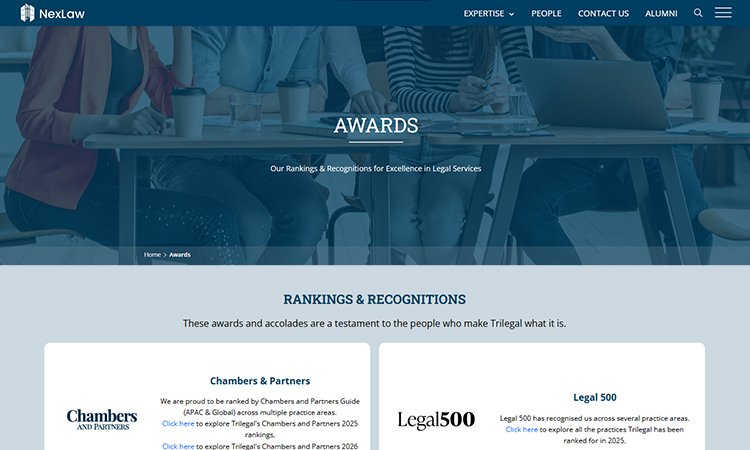
Getting listed on a “Top Lawyers” list or winning a local or national legal award is more than just a nice honour, but it also acts as a credibility booster. Showing them can make all the difference online, as clients often feel skeptical about trusting a business online.
Awards often signal to both the media and the clients that your law firm is well respected within the legal industry. In this section of the blog, we will discuss the importance of awards for PR and how law firms can promote awards effectively to gain recognition:
- 4 Key Reasons Awards Matter in Public Relations
- Builds Third-Party Credibility: Awards act as validation, showcasing stakeholders such as partners, clients, and investors that a reputable legal association recognizes your firm.
- Differentiates your Law Firm and Offers Visibility: In the highly crowded legal sector, winning high-authority awards can help a brand stand out from the competitors. Promoting this win can extend visibility through website badges, social media, and press releases.
- Improves Sales and Fosters Trust: By using award logos in marketing materials or pitch decks, law firms can create instant trust, often reducing client anxiety and making them feel more confident about their decisions.
- Offers a Great Opportunity for Media Coverage: Winning a competition or even getting shortlisted makes for an engaging story, allowing PR pros to feature stories and secure media interviews.
- How Can Law Firms Promote Their Awards and Recognitions?
Showcasing awards and recognitions is vital for PR for law firms. Let’s take a look at how lawyers or attorneys can showcase their awards and recognitions to get the attention of potential clients and gain trust and credibility:
- Digital and Website Optimization
- Develop a Dedicated Awards Page: Law firms must consider creating a dedicated page for “Awards and Recognitions” on their website, highlighting major achievements like descriptions, logos, and links to the awarding body.
- Update Attorney Bios: Make sure to include significant honours within individual lawyer bios to offer immediate proof of expertise to potential clients.
- Make Use of Award Badges: You must display earned logos on the homepage of your website, in email signatures, as well as in digital marketing materials, ensuring they are used wisely and in an organized manner rather than making your website look cluttered.
- Optimize for SEO: Law firms must use relevant keywords in award announcements, such as “Best Attorney in the Philippines 2026”, to boost visibility in the search results.
- Social Media and Content Marketing
- Launch a Social Media Campaign: Lawyers must announce the award across all platforms, especially when using LinkedIn to target professional networks.
- Share “Evergreen” Content: Rather than treating your award as a one-time announcement, law firms must repurpose the news of receiving an award throughout the year. For example, #Throwback Thursday.
- Create Behind-the-Scenes Content: By posting videos and photos from the awards ceremony, law firms can humanize their firm and create buzz.
- Highlight the “Why”: Law firms must clearly explain the context- what the award signifies, the thorough selection process, and what it means for clients.
- Media Relations and PR
- Issue a Press Release: Law firms must distribute a formal press release about the awards received to local business journals, industry news outlets, and legal publications.
- Pitch “Why It Matters” Stories: Instead of simply announcing a win, law firms must pitch stories to industry journalists that highlight the specific innovation, work, and client impact that led to the award.
- Update Media Kits: Law firms must include the latest awards received in the media kit of their firm to build credibility when pitching for future media coverage.
- Direct Marketing and Business Development
- Email Client Updates: Make sure to send a newsletter to clients and referral sources announcing the award, framing it as a “thank you” for their partnership.
- Integrate into Pitches: Law firms must strategically integrate their awards and recognitions into fresh business proposals and pitches to offer “social proof” of their firm’s expertise.
- Internal Promotion
- Celebrate Internal Wins: You must announce awards internally to improve employee morale and pride.
- Use Your Employees as Ambassadors: Law firms must encourage their employees to share the news on their personal LinkedIn profiles to expand reach.
Measuring the Impact of Public Relations: Key PR Metrics Law Firms Must Track
In order to ensure PR success, law firms must track some of the major metrics. In this section, we have discussed a few of them:
- Share of Voice
This metric measures the percentage of media conversation your law firm owns in comparison to competitors within specific practice areas. A higher SoV often signals higher visibility in the market.
- Reputation and Sentiment
Reputation and sentiment evaluate whether media mentions and online conversations are negative, positive, or neutral, helping determine the public perception about your law firm.
- Engagement Rate
This measures how target audiences are interacting with your firm’s PR-driven content (likes, shares, and clicks) rather than just passive impressions.
- Search and Website Visibility
Engagement rate tracks how your PR efforts are impacting SEO, especially through the quality of backlinks and organic traffic driven from media placements.
- Media Performance
Media performance assesses the quality and reach of placements such as top-tier legal publications vs. local news, and how often main messages are included.
- Thought Leadership Coverage
This metric focuses on the frequency and impact of the articles, legal commentary by partners, speaking engagements, building expertise, and improving the authority of your law firm.
FAQs
Ans. Law firms should seek PR services when they are aiming to establish authority, enhance visibility, and manage reputation through meaningful media relations.
Ans. To choose good legal PR services, law firms must consider certain factors, such as specialized expertise in delivering exceptional PR services, proven crisis management skills, and a powerful relationship with the media. Make sure to review their track record of success with similar cases, assess their ability to deal with confidential information, and ensure they offer personalized, measurable PR strategies.
Ans. PR for law firms offer services to establish a strong reputation, credibility, and visibility, including effective crisis communication, press release writing services, media relations, influencer outreach, and online reputation management services. These agencies can help position attorneys as thought leaders, manage their reputation online, and secure media coverage for major wins.
Yes, engaging in industry events is a highly effective public relations strategy that fosters brand visibility, fosters direct audience engagement and enhances credibility. Events, including service launches and community networking, can allow law firms to tell their brand story, generate media buzz, and build emotional connections, making them crucial for positive public perception.
Ans. Having a well-defined crisis management plan ensures quick, transparent, and strategic communication. This protects the integrity of business firms during negative publicity or high-profile disputes.
Ans. When choosing a PR agency for law firms, they must consider factors such as prior experience in serving lawyers, a proven track record of delivering measurable results, and a tailored approach that corresponds to your unique goals and practice areas.
Conclusion
PR for law firms is not just about publicity- it is more about protecting and strengthening the professional credibility of your firm. In the legal sector, where trust and expertise matter more than anything, shaping public perception can directly impact client decisions.
By implementing the PR strategies mentioned above, law firms can not only position themselves as thought leaders in the legal industry but also build brand trust and credibility. In case you find the whole process too overwhelming, you can perhaps consider consulting a professional PR expert.
