

Getting featured in top-tier publications is a dream for every architectural company. However, it takes more than just distributing press releases or sending out generic pitches. The media landscape within the engineering, construction, and architecture sectors has its unique challenges and policies. This is where PR for architecture firms comes into play.
Public relations can help architectural firms present their projects and ideas to audiences beyond their individual channels, such as social media, industry events, and trade publications. Each of these placements contributes to visibility and recognition.
In this article, we will be discussing some effective PR strategies that architectural companies must implement to gain coverage in top publications.
What is PR for Architecture Firms
Public relations for architecture companies is a strategic communication approach. It helps architects establish brand awareness and showcase their expertise in design. This strategy secures media features in top design publications, promotes completed projects, and positions architectural firms as thought leaders in the industry.
PR is a valuable tool for architecture businesses to expand their clientele, build industry credibility, and fortify trust among the public.
6 Benefits of Implementing PR for Architectural Businesses
PR for architecture companies offer an abundance of benefits. In this section of the blog, we will look at some of the major reasons architects should invest in public relations:
- Establishes a Powerful Brand Image
Public relations can successfully shape how the public and potential clients perceive your architecture firm. PR can help you consistently get featured in top-tier publications and leverage storytelling to showcase the unique values of your architecture company. This approach can transform you from just another architectural firm to a memorable brand.
- Effectively Manages Crisis
No business is resistant to crisis. No matter how good you are or how effective your strategies are, navigating unexpected challenges can be very difficult. Having a robust PR strategy in hand can provide architects with a transparent and quick communication plan to address these risks. By speaking out clearly and honestly, architectural companies can help safeguard their reputation and retain the trust of their clients.
- Offers Broader Visibility in the Market
Public relations can be a very effective approach to reach new audiences through websites, magazines, and social media channels. Unlike traditional advertising, a feature article or news mention might feel more genuine to your audiences. This can expose your firm’s work and projects to a wider group of people who might not look for your firm otherwise.
- High-Quality Lead Generation
Effective PR for architecture firms can help you target the exact groups that are looking to hire architects, such as real estate developers, property owners, or interior designers. When people read your project profiles and advice from experts in a news source, they are likely to feel more confident about their decision. These highly interested leads often turn into high-value clients over time.
- Improved Brand Recognition and Trust
People are more likely to work with an architecture company that they are familiar with and respect. By leveraging effective PR strategies, public relations experts can help make your architecture firm regularly mentioned in press coverage, making your firm a familiar name in the local and national building community.
- Position Your Architecture Firm as an Industry Leader
Sharing expert opinions on design trends and urban planning can set your architecture firm apart from its competitors. By incorporating PR for architecture businesses successfully, architects can share their knowledge through interviews, podcasts, and guest articles. Through this approach, architecture companies can establish themselves as thought leaders in the industry.
PR Strategies to Help Architectural Businesses Get Featured in Top-Tier Publications
Having a clear understanding of how to personalize your approach in order to match the growing expectations of your clients is crucial. Below, we have mentioned 7 highly effective PR strategies to help architects gain coverage in top publications:
- Target the Right Journalists

The first and most important strategy of PR for architecture firms is to target journalists who are more likely to be interested in covering your story.
No matter how well-written your pitch is, if you are pitching your architecture services to a fashion and entertainment journalist, all your efforts will go in vain.
The most effective yet easiest way to create a list of journalists who are more likely to be interested in what your company offers is to type a few keywords relevant to your sector into Google.
Here are some tips architects can use to target the right journalists for their brand:
Tip 1: Research Relevant Journalists
Architecture firms should search for reporters, editors, or journalists who cover topics such as real estate, urban development, and interior design.
To ensure successful PR for architecture companies, architects should thoroughly review relevant newspapers, magazines, and digital design blogs to identify which journalists write about local or international projects. This will help you build a dedicated list, ensuring your pitches reach the right journalists.
Tip 2: Assess Their Past Works
Next, you should study the past articles of each selected journalist. You must have a clear understanding of the tone, types of topics, and writing patterns the journalist follows.
This will help you determine if a new commercial, residential, or public project matches the journalist’s beat. Aligning the type of project you are currently working on to the right interest prevents your efforts from going in vain.
Tip 3: Connect With Them Across Various Platforms
This is one of the most important aspects when doing PR for architecture businesses. Not only is it a crucial strategy of PR for architecture firms, but this approach also helps architects to target the right journalists.
In order to connect with the right journalists, architecture firms should engage with journalists on social media channels and other professional networks before sending a pitch.
Consider commenting on their recent articles and sharing their work you liked. This often showcases that you are genuinely interested in their writing. These approaches often help build strong connections. And remember, meaningful connections with reputed journalists can increase the likelihood of your pitches getting featured over others.
Tip 4: Craft Personalized Pitches
Rather than sending generic mass pitches, architecture companies should focus on developing personalized pitches for each journalist.
Clearly highlighting why a specific project might appeal to the target audience of a specific journalist maximizes the chances of getting a response.
Sending personalized pitches is crucial to ensure successful PR for architecture firms. Brief, clear, and visually appealing pitches are great for grabbing the attention of a journalist.
To keep all the relevant journalists you found in one place, create a spreadsheet that contains:
- Full names of all the journalists you think are relevant to your brand
- Email addresses of the journalists
- Link to the article that made you discover them
- Link to the Twitter or LinkedIn profiles of the journalists
- Time zone of the journalist (on the basis of the city they reside in). Including this is crucial so that you can send your pitches when they are most likely working or going through their email.
- Establish Meaningful Relationships, Not Just Media Lists

This is yet another vital strategy of PR for architecture firms to get featured in top publications. Having established relationships with journalists can increase the chances of your pitch getting noticed.
But how can you build meaningful connections with journalists? Let’s look into it:
- Research and Personalize Approach
Journalists are super busy people, and generic mass emails can be easily ignored. So, architecture companies should read their previously posted articles before reaching out to them and tailor their pitches accordingly. This approach often showcases that you respect their time.
- Offer Expert Opinions
Journalists need authoritative sources to extract news of housing crises, sustainability shifts, and industry trends. To ensure effective PR for architecture, brands should position their leaders as thought experts in the industry.
They should position their CEOs and executives as industry thought leaders. They should share valuable insights on broad topics instead of only pushing their new buildings.
- Value their Strict Schedules and Press Needs
Media professionals work under tight deadlines. Make sure to respond to a quotation request within hours and include high-quality images.
This will not only make your architecture company more preferable but also position you as a go-to source. Reliability can be immensely helpful for earning long-term professional respect.
- Provide Exclusive Access
When doing PR for architecture firms, you should offer a trusted publication first access to your new design or project. This often creates highly valuable mutual benefits.
Exclusive previews often offer an engaging story to a journalist while guaranteeing your architecture company receives effective media coverage.
- Maintain Consistent Engagement
Establishing an authentic partnership with journalists often requires consistent, professional communication beyond active project launches.
By congratulating journalists on great stories or achievements, or sending them valuable insights or expert opinions now and then, architecture brands can strengthen their relationship with media professionals. Another great approach for establishing meaningful relationships with media professionals is to seek media relations services.
- Invest in Engaging Visual Assets

Sending a text-only pitch is an outdated trend. Nowadays, when doing PR for architecture firms, they include compelling visual assets to immediately explain what their company specializes in and why what their company does is important.
With the majority of journalists using multimedia assets like images, videos, and data visualizations that are included in pitches, adding visual assets can simply maximize the chances of getting featured in top publications.
- Types of Visual Assets Architecture Companies Can Include in Their Pitch
- Charts and Graphs: These assets often showcase magnitude and direction, such as trends, distribution, or comparison.
- Diagrams and Flow Charts: Highlight sequences and causality, such as system logic, processes, and outcomes.
- Icons: Help journalists quickly scan when categories repeat across multiple slides.
- Mockups and Screenshots: Architectural companies should include these visual assets in their pitches to build tangibility.
- High-Resolution Images: Including these visual assets is crucial. They build a practical context when the setting matters.
- Timelines and Roadmaps: Architecture firms should implement these to showcase progression without turning the pitch into narration.
- Maps: These can be used to highlight the geographic limitations or distribution dynamics.
- 4 Ways Architecture Companies Can Leverage Visual Assets Into Their Pitch
To do PR for architecture firms successfully, here are a few ways architectural businesses can implement visual assets into their pitch:
- High-Quality Images
When crafting pitches to get featured in top architecture and design publications, architecture companies should lead their pitch with a single, compelling exterior image that was shot during a major event. Editors often look for immediate visual hooks that prevent news readers from scrolling away.
Make sure the image is of the highest quality, colour-graded professionally, and does not contain any distracting elements. This hero image is crucial as it sets the tone for your entire story.
- Interactive Diagrams
Journalists and editors at top publications are always on the go. They receive a bulk of pitches every day. By including digital wireframes or diagrams of floor plans along with the final photos, architecture companies can grab the attention of editors immediately.
Publications often prefer showing the transformation from a blank page to a complete structure. These raw visuals can be highly effective for adding a human touch, proving a thoughtful and exact design process to journalists.
- Engaging Walkthroughs and 3D Visuals
To implement visual assets successfully in your pitches when doing PR for architecture firms, you must consider including 3D walkthroughs.
Add accurate links to short video animations, drone footage of the new property you built, and interactive 3D models for media outlets that focus on modern, technology-focused architecture. Moving visuals can attract attention much better than static shots on online platforms.
To make it easier for journalists to review the files without downloading massive-sized files, avoid making the files too heavy.
- Organized Press Kits
Architecture firms should assemble all their visual assets into a secure, online media kit that should include captioned photography, immersive architect headshots, and a short service summary. Editors of major publications often have strict deadlines, so they appreciate organized assets that save their precious time.
To develop an effective pitch, architecture companies should ensure all the file names of the images they have used in the pitch clearly describe the visual and give proper credit to the photographer.
- Master the Art of Newsjacking

Newsjacking is one of the major elements of successful PR for architecture firms. It is the process of implementing your ideas and perspectives into a breaking news story or trending topic to gain media coverage, maximize the visibility of your architecture brand, and position your business as a thought leader.
- A Step-By-Step Guide to Successful Newsjacking
Here is a comprehensive guide for architecture companies to do newsjacking successfully:
Step 1: Set Up Real-Time Monitoring
It is impossible to hijack the news if you have no idea what is happening. Setting up an early warning system often guarantees you identify relevant news stories first. Here are a few ways architecture companies can determine accurate news:
- Google Alerts: By leveraging this tool, architecture firms can track relevant industry keywords, names of their competitors, and key subject areas. For example, “urban planning codes,” “green zoning laws”.
- Social Listening: Through social listening, you can closely track trending tags on platforms like LinkedIn and X.
- AI Aggregators: This is one of the most important ways to determine relevant news for doing successful PR for architecture firms. By using tools like Google News and Perplexity, architecture brands can integrate quick breaking updates.
- Media Scanning: Media scanning tools like Meltwater and Cision can be effective for closely monitoring top publications such as The Wall Street Journal or major architecture blogs regularly.
Step 2: Establish a Pre-Approved Core Messaging Directory
To do newsjacking successfully, you need to act within minutes, not days. Rather than sticking to corporate formalities, architecture companies should prepare specific points to talk about beforehand.
- Document Your Core Viewpoint: You should clearly define your point of view on trending topics like affordable housing density, adaptive reuse, and climate-resistant architecture.
- Media Assets: Architecture firms must keep high-quality headshots, brief executive bios, and links to their digital portfolio ready so that they can send them in a single notice.
Step 3: Identify an Architecture-Relevant Angle
With the breaking of a major news story, a lot of brands get involved in political debates. However, we suggest you avoid that. To ensure successful PR for architecture companies, you should decide on a specific news angle where you can add unique value.
For example, if you are planning on speaking about extreme climate shifts, your newsjacking angle should be “How to Build Hurricane-Proof Coastal Homes.”
Step 4: Develop and Pitch Your Expert Commentary
Once an event breaks, you should craft your analysis or quote instantly. Keep your submission brief, highly technical, and valuable for a journalist.
- Speed is Crucial: Speed matters the most when it comes to PR for architecture firms. Architects should try to get their commentary to targeted reporters within 30 to 60 minutes of the story breaking.
- Target Specific Desks: You should avoid spamming journalists with general news addresses. Architecture firms should pitch directly to urban planning, real estate, and design journalists by leveraging media outreach platforms.
- Craft Clean Quotes: Make sure to write exactly how a real architect speaks. Rather than using overly promotional language to promote your architecture company, you should focus on offering informative and actionable data.
Step 5: Elevate Your Story Across Various Platforms
Instead of depending solely on the publication to notice and cover your architecture company, increase the visibility of your insights by leveraging your own channels.
- Blogs and LinkedIn Articles: Architecture firms should publish an extended version of their commentary directly to their website’s dedicated blog page and their company’s LinkedIn profile.
- Visual Social Media Snippets: You should develop quick, informative content like sketches, plan diagrams, and a 60-second video for Instagram and LinkedIn using trending news and hashtags.
- Integration of Call-to-Action: Make sure to end your newsjacking content with an asset for lead generation, such as subscribing to your company’s urban planning newsletter.
- Develop Valuable Press Kits
With every other architecture firm competing to get the attention of journalists, it is becoming increasingly difficult over time. Journalists are flooded with enormous amounts of press releases regularly. However, naturally, not every architecture company gets a chance to see their story published in top publications.
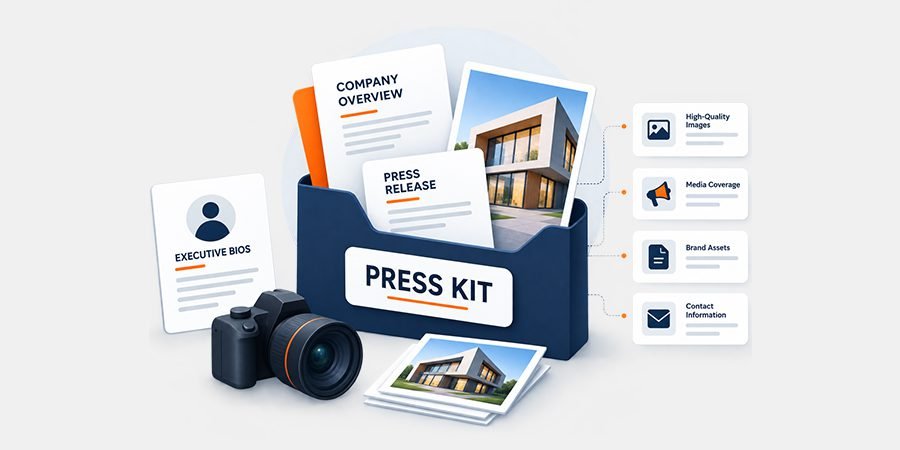
A well-curated press kit is a vital asset for PR for architecture firms. It is the most important factor for breaking through the noise and being noticed by editors and journalists of reputable architecture and design publications.
So, let’s take a look at how architecture firms can develop effective press kits to ensure the success of their PR efforts:
- Essential Components of a Press Kit
- Company Overview or Boilerplate: It is a brief summary of the founding date, mission, key achievements, and crucial facts about your architecture brand.
- Headshots and Executive Bios: This should contain profiles of your top executives and high-quality photos of your founders and co-founders.
- Brand Assets: These should contain downloadable, high-quality logos with transparent backgrounds, images, and descriptions of your services.
- Recent Press Releases: Press releases are one of the most important pillars of successful PR for architecture firms. These are usually new updates on events, service launches, or company news.
- Media Coverage: Links or clips that showcase your awards, accolades, past features in reputed publications, and social proof.
- Contact Information: Your contact information should include clear and direct details of your media relations team or the spokesperson who is supposed to talk to the media.
Here’s how architectural companies can develop an effective press kit:
Step 1: Clearly Outline Your Core Audience and Purpose
To ensure successful PR for architecture brands, they should start by understanding what makes their brand unique and who they are willing to reach.
Draft your core message, decide on the media outlet you wish to target, and the specific goal of your launch or announcement.
This focus guarantees that every asset you are including in your press kit speaks directly to the journalist you are looking to attract.
Step 2: Collect Vital Company Information
Next, you need to gather clear and accurate background information about your architecture firm. Develop a short company history, and include vital facts like your key leaders, foundation dates, and office locations.
When developing this section, you should keep the information purely factual, compelling, and easy for a journalist to quote directly.
Step 3: Develop an Engaging Press Release
Over 70% of Indian journalists still consider press releases as a major source of their news stories. Your press kit must contain a press release. Seeking professional press release writing services can help architecture firms write effective press releases, showcasing the latest news about their company or the introduction of a new service.
Being one of the most vital components of PR for architecture firms, brands must put major focus on these elements. When developing a press release, make sure to include a clear headline, an accurate dateline, and a standard format that clearly answers the 5 W’s (Who, What, Where, Why, and When) in the opening paragraphs.
End your professional press release with a boilerplate (company overview) and details of the spokesperson who is responsible for talking to the media.
Step 4: Collect High-Resolution Visual Assets
To ensure effective PR for architecture companies, they should highlight their past successes to establish instant trust among new journalists.
You should include links to authoritative press mentions, positive client reviews, and relevant industry awards you have won.
This evidence often proves that your company has a strong footing in the market and a proven track record.
Step 5: Choose the Right Format and Platform to Distribute
Make sure to decide how you will share your press kit with the media. To ensure successful PR for architecture firms, consider developing a public or password-protected page on your website for seamless cloud downloads.
Another format to distribute your press release in is a clean PDF version that can be easily shared through email.
Before distributing, architecture firms should thoroughly review all the links to ensure media professionals can easily access the press kit without any hassle.
- Position Your Architectural Firm as a Thought Leader

In order to establish credibility beyond project work, architecture companies should position their team as a go-to expert on topics that shape the established environment- whether it is for urban planning, sustainability, or broad industry trends.
Editors often look for commentary that goes beyond basic talking points. They prefer subject matter experts who can clearly express the reason behind “why” and offer their point of view on current challenges or changes in the industry.
- How Can Architecture Companies Position Their Executives As Thought Leaders
Here are a few ways architecture brands can position their executives as thought leaders:
- Publish Authentic Research and Articles
Architecture companies should create and share in-depth articles and whitepapers on major trends like green materials, smart cities, and adaptive reuse.
By sharing case studies and data from their individual projects, you can prove your expertise. Maintaining a consistent publishing schedule can help build trust among clients that are looking for architecture and design partners.
- Speaking at Major Industry Events
Industry events are a major part of PR for architecture firms. Securing panel slots and keynotes at major real estate and design conferences can help architecture firms to put their leaders directly in front of their audiences.
Consider sharing unique viewpoints on emerging urban challenges rather than simply showcasing your past works.
Live Q&A sessions can also be highly effective for letting them show that they think quickly and have a deep understanding of the sector.
- Leveraging Online Platforms and Social Media
Architecture brands should leverage professional networks like LinkedIn to share regular insights, engaging behind-the-scenes content of their projects, and expert commentary on global architecture news.
By posting short-form videos to simplify complex zoning laws, architecture firms can make their knowledge easily accessible. Consistent online activity can keep your firm top of mind for new business opportunities.
- Participating in Design Awards
Engaging in prestigious design competitions can be immensely helpful for elevating the status of your architecture company. Winning or presenting awards at award shows can showcase your standard of excellence to the public.
7 Common PR Tools that Architectural Firms Should Implement to Achieve Maximum Impact
The public relations landscape is changing rapidly, and it is difficult to choose the right tools to stay ahead of this shifting space. To make PR for architecture firms easier, we have discussed some of the tools that are loved by PR professionals:
- Muck Rack
This tool can help architecture firms connect directly with architecture, real estate, and design journalists by using a searchable media database.
- Unique Features of Muck Rack:
- Architecture companies can easily claim and update their profiles, ensuring contact details, beat changes, and recent articles remain accurate.
- It offers direct insight into the preferences of a journalist. What they cover and how they prefer to be pitched.
- This tool automatically generates targeted media lists on the basis of keywords, topics, and campaign strategies.
- By leveraging Muck Rack, architecture companies can develop personalized outreach that is linked directly to a journalist’s recent coverage history.
- Meltwater
It is a highly effective tool used when doing PR for architecture firms. Meltwater tracks global media coverage and industry sentiment about emerging urban design trends and new building projects.
- Unique Features of Meltwater:
- This tool combines traditional print, news, social media platforms, podcasts, and broadcasts across multiple languages.
- It is a great tool for crisis management, as it sends out immediate alerts during media spikes or sentiment changes so teams can react quickly.
- Meltwater can generate automated coverage reports and easily shareable visual metrics
- By using this PR tool, architecture firms can connect with hundreds of thousands of established global media contacts to ease targeted press release distribution
- Prowly
Prowly is yet another effective tool for PR for architecture firms. It simplifies the development of visually engaging press releases and helps establish a clean, journalist-friendly digital showroom.
- Unique Features of Prowly:
- This tool can help architectural companies to identify relevant contacts by researching relevant niche keywords and related conceptual hashtags
- It can help build drafts for press releases, subject lines, and pitch summaries by using prompts that are personalized beforehand for PR best practices
- Prowly features drag-and-drop formatting that allows architecture brands to develop visual, multimedia-rich press releases instead of plain text-only releases.
- By implementing Prowly, architecture firms can track coverage of their competitors to determine active journalists who cover topics on real estate, design, and architecture.
- Brand24
This specific tool is highly effective for tracking real-time web and social media mentions to see how the public reacts to your architectural firm’s revealed structure.
- Unique Features of Brand24:
- This tool sends notifications immediately when it senses an unusual increase in reach and mention volume, helping architecture companies to identify a PR crisis before it escalates.
- Make sure to stream live mentions across various news channels, podcasts, blogs, and social platforms as they happen.
- It helps architecture companies determine sentiment by categorizing mentions into positive, negative, and neutral to monitor changes in public perception.
- It catches conversations about your architecture brands even when users do not directly tag your official social handle.
- OnePitch
OnePitch is a great tool that must be utilized when doing PR for architecture firms. It breaks down cold pitching to tech and architecture journalists with personalized data and templates.
Unique Features of OnePitch:
- This tool allows architecture companies to develop and format targeted pitches in just a few minutes. They offer featured templates so that architecture brands do not have to go through massive media databases manually.
- OnePitch is highly effective for architecture companies as it analyzes their submission history after three or more pitches and suggests journalists who are ideal for them.
- It allows architecture brands to send emails directly through the platform while closely tracking real-time metrics such as open rates, responses, and number of clicks on links.
- This tool leverages a proprietary form or uploaded documents like press releases. This helps architecture companies assess content and match it with the unique beat of the journalists based on recent writing history rather than static keyword searches.
- PrPropel
PrPropel, also known as Propel PRM, is a great tool for public relations for architecture companies. It acts as an all-in-one PR CRM with email plugins and AI tools to pitch your building projects more effectively.
- Unique Features of PrPropel:
- This tool lets architecture companies pitch directly from their own Outlook or Gmail inbox with live read, open, and reply tracking rather than depending on a bulk external server.
- PrPropel implements high-reasoning AI models that thoroughly evaluate their pitch context and actual press release rather than just basic keywords to identify relevant journalists.
- By using this tool, architecture firms can automatically schedule and send pitches based on data that clearly indicates the specific time and day a specific journalist is most likely to open their email.
- This is a great tool when doing PR for architecture firms. It integrates with Google Analytics to connect earned media directly to website traffic, quantifiable ROI, and user conversion.
- Cision
Cision is a PR tool that delivers enterprise-scale press distribution and solid analytics to track the reach of design and architecture campaigns.
- Unique Features of Cision:
- It allows architecture firms to access hundreds of thousands of established influencers, journalists, and bloggers who are easily searchable by beat, location, and outlet.
- Cision can help architecture firms to manage contact lists and monitor engagement to modify media relations.
- This tool allows architecture companies to distribute press releases directly to global newsrooms, digital feeds, and target syndication sites.
Doing Architectural PR Right: 5 Major Public Relations Mistakes to Avoid
In this section, we will be discussing some of the major missteps of PR for architecture firms and how architects can avoid them:
- Pitching Irrelevant Journalists
Reaching out to journalists who do not cover architecture topics will not only waste your time but also your efforts. If you pitch your architecture firm to a science and health journalist, it will clutter their inbox with content that is useless to them. This practice can not only ruin your credibility but also lead to ignored pitches.
- How to Avoid Making This Mistake?
- Architecture companies should thoroughly research reporters before sending a pitch.
- Make sure to read their previously published articles in order to check their exact beat
- You should target only those journalists who focus on real estate, design, and local development.
- Bombarding Journalists With Generic Emails
It is a major mistake made when doing PR for architecture firms. Sending out similar mass emails to multiple journalists at once often showcases that you do not care about or respect their beat. Generic messages are likely to get deleted right away as they might feel like spam. Journalists often prefer a personalized approach that aligns with their specific audience.
- How to Avoid Making This Mistake?
- You should write a personalized pitch for every journalist you contact
- Do not forget to mention a recent story written by them to show that you read their work.
- Make sure to clearly explain why the specific project you are pitching a journalist for matters to their readers.
- Following Up Too Often
If you are sending out too many follow-up messages, stop it because it is considered one of the most common mistakes of PR for architecture firms. Following up too frequently might not only annoy busy journalists but also make your architecture company look pushy and desperate. Rather than getting a reply, there is a high chance that you might end up getting blocked or ignored.
- How to Avoid Making This Mistake?
- Instead of reaching out to journalists too often, you should wait for at least four to five days before sending out one professional follow-up.
- You should accept the “no response” as a polite no after two total follow-up attempts.
- Shift your focus and efforts to pitching new and better-fit contacts.
- Neglecting Story Deadlines
Missing a journalist’s deadline can ruin your chance of getting featured. Newsrooms are often operated under strict schedules. If you deliver information too late, no matter how valuable it is, the story goes to print or air without you.
- How to Avoid Making This Mistake?
- To ensure timely submission, architecture companies should ask the publication about their deadline right away.
- Make sure to respond to every media request within a few hours, rather than taking days to reply.
- Architecture companies should keep the facts and quotes of their projects ready before crafting the pitch.
- Failing to Offer Valuable Media Assets
Pitching a good project without high-quality photos often leaves the journalist with extra work. Journalists usually require high-quality images and clear sketches to tell a visual story. Without good photos, journalists are likely to skip your project.
- How to Avoid Making This Mistake?
- To avoid this mistake when doing PR for architecture firms, you should attach the link to the media assets to a clean, online press kit right in your first email.
- When reaching out to media professionals, architecture businesses should include professional architectural pictures and floor plans.
- Make sure you have the valid permissions and photo credits which you can easily share.
FAQs
Ans: Magazine editors often prefer a short, 150-400 word email containing a compelling headline, a powerful opening hook, a clear summary of the article, proper proof of why it meets their specific audiences, and links to relevant writing samples.
Ans: An architecture company should choose local publications if their fundamental goal is client acquisition and gaining local projects. On the other hand, targeting global publications can be helpful if your goal is to increase brand recognition and build a positive reputation globally.
Ans: A newsworthy story matters a lot for PR for architecture firms. A publication editor considers a story newsworthy only if it directly influences and interests their audiences. Editors often look for fresh and relevant content that carries a specific significance.
Ans: No, generic press releases are not enough on their own to get the attention of top architectural publications like Dezeen and Architectural Record. These editors receive hundreds of pitches every day. So they look to cover exclusive news, professional photography, humanized stories, and effective pitches.
Ans: Yes, editors often prefer discovering fresh and innovative talent. When developing a pitch to get coverage, you should focus it on a unique design solution, a strategic use of affordable materials, or an engaging local community story.
Final Thoughts
With every architecture company fighting to secure a feature in the top architecture and design publication, investing in PR for architecture firms is non-negotiable. By pitching relevant journalists with accuracy and including professional photographs in your pitches, architecture companies can maximize the chances of their stories getting featured and published in top publications. In case you are just starting out and have no idea where to start, you can perhaps consider partnering with an experienced public relations agency.
