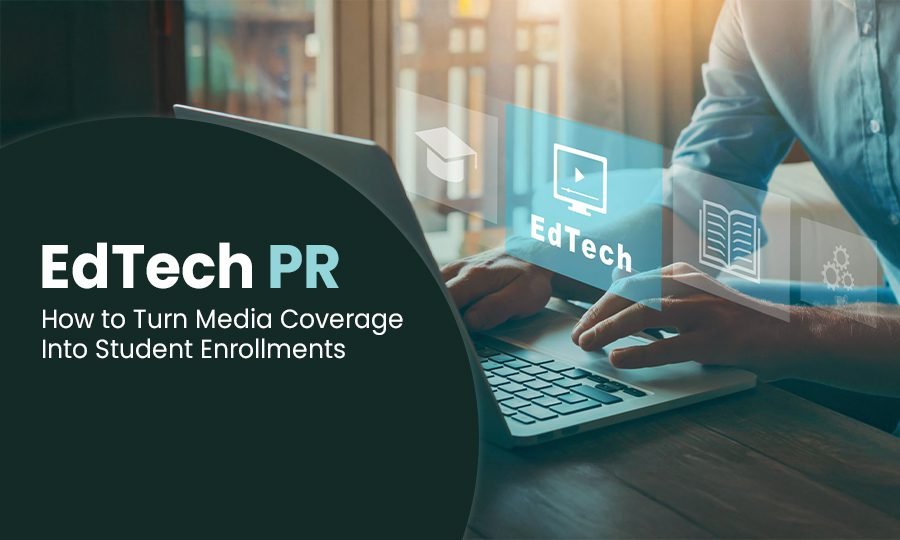
The EdTech industry has ushered in a new era in which students can make more informed choices when selecting between academic options. Agencies that provide strategic EdTech PR can help an educational organisation guide prospective students from awareness through to application by creating the right conversations to build credibility, engaging content to spark interest, and a compelling enrolment journey.
According to a 2026 Sliced Brand study, EdTech companies are more likely to achieve almost 30% better outcomes with effective story-driven PR strategies. Now, you can imagine the amount of benefits you can leverage with a strategic PR approach for your EdTech company,
In an environment where cold acquisition channels struggle, a properly curated PR strategy bridges the gap in trust. The impact of a good PR strategy is driven by measurable success and real-world results. If you want to observe how a platform is transforming engagement and improving academic outcomes across all forms of learning environments, you can explore the latest impact reports and the recent industry data.
What is EdTech PR?
It refers to the public relations strategy that provides education technology companies, online learning platforms, and educational institutes and brands selling technology-led learning products with ways to build awareness about their services, make their brand more credible, and create a positive public image.
An EdTech company must aim at placing its business within conversations that matter to students, parents, educators and the broader industry. When a student is making choices between institutions for a certain specialisation, seeing a brand or its experts quoted can influence their decision-making because their perception of the organisation improves.
6 Key Benefits of EdTech PR for Student Enrollment
An educational technology PR agency focuses on building brand credibility and authority in the long run. This factor is extremely needed to convert potential students into enrolled applicants.
Given below are 6 benefits that you can gain if you opt for EdTech PR for the enrollment of students.
- Building Trust Among Potential Students
Any field or specialisation of education can be a big decision for the students and their parents. Independent coverage of media, interviews with experts, and credible thought leadership can help boost confidence in an EdTech brand. Being promoted or featured in a publication provides a third-party endorsement that students and parents can trust beyond a brand’s own advertising.
- Increasing brand visibility
EdTech PR helps brands break through the hustle of social media, websites and ads by reaching people who can visit education, business, technology and career publications. This helps improve the position of the brand in places where potential students are likely to exist.
- Establishes Thought Leadership
Founders, faculty members, and academic leaders can position themselves as credible voices on topics related to education and industry. Maintaining thought leadership consistently in the media can help an EdTech company build authority around certain areas of learning, skills or career development.
- Better Discovery of Courses
Students tend to look at the careers and skills they need to learn about before looking into courses. EdTech PR can bring relevant programs into these conversations and help make students aware of courses that are relevant to what they are looking for.
- Creating Long-Term Digital Visibility
A prospective student may interact with a brand’s social media, articles, videos, and online courses multiple times before making a final decision. Media coverage and engagement can help ensure that the brand stays as the first thought in a student’s mind when they continue to do their course research.
- Making The Enquiries More Qualified
With the right call-to-action, landing page, CRM integration, and timely follow-ups, you can support your EdTech brand’s overall lead generation and enrollment strategy. The conversations in the media can support the enrollment process and lead to more enquiries, counselling session applications, and enrollments.
Want to leverage all these benefits for your EdTech company? You can seek professional EdTech PR services from a reliable public relations agency.
How to Turn Media Coverage into Student Enrollments: 8 Must-Know Steps To Follow
Transforming any form of positive press into a powerful recruitment tool requires a carefully curated strategy. This is important for turning public visibility into prospective student enrollment.
In the following few steps, we will outline a few things that you can keep in mind while converting media coverage into student enrollment.
Step 1: Start with the right goal

An EdTech PR campaign needs to have a goal to focus on the most relevant situations. A goal also provides metrics the brand can use to measure the campaign’s effectiveness. While the ultimate goal should be to increase student enrollment, public relations strategies for educational technology should help students choose the right journey.
The PR team needs to identify the program, the audience and the enrollment goal to set the context of the entire campaign. The objective should also define the type of media conversations that may be relevant.
Important Points To Be Considered:
- Always identify the programme that needs visibility
This ensures your PR efforts are hyper-focused on promoting a specific service rather than making the message about generic facilities.
- Better definition of the segment that the campaign should target
Strategies like this will allow you to customise your media planning and the message that you want to deliver to the relevant academic backgrounds and interests of the suitable learners.
- You should keep in mind the admission timeline of the course
Your focus has to be on ensuring that you align your campaign with the correct enrollment dates so that the stories that you want to say about your brand are highlighted when students are choosing their institutions.
- Clearly define the action that the media should take
This provides a clear call-to-action (CTA) for readers, guiding them on exactly what to do next after consuming your PR content.
- Never forget about setting proper indicators
There are certain measurable benchmarks in EdTech PR that will allow your team to keep track of the campaign insights and highlight the impact it has on the overall enrollment process.
- PR message should be based on the overall lead-generation objective
Curating a story rooted in lead generation makes sure that your media outcome is directly addresses students’ concerns and increases enrollment interest.
Step 2. Build Stories Around Student Needs

If you go through the history, you will understand that students never watch or engage with educational content just to increase the visibility of the institution. They are always seeking information that is going to help them figure out their educational journey. Here, EdTech PR brands can work as a medium to engage in these conversations by finding ways to add some value. Therefore, the very first step for the brand should be to observe the issues that potential students might face and the queries they may have.
Factors To Be Considered:
- Skills That Are in Demand in a Particular Industry
When you are building a campaign, the very first thing you should do is share data-backed stories or industry reports that spotlight the exact technical and soft skills top employers are actively seeking right now.
- Career Options Available After Learning a Particular Skill
You also cannot forget to map out clear career pathways and alumni success stories to show students the diverse job roles open to them after completing a course.
- Link Between Technology and Profession
Another important factor is to create futuristic content that explains how tools like AI and automation are changing daily job responsibilities, helping students stay ahead of the curve.
- Factors Students Consider Before Studying an Online Course
A very important step is to provide transparent guides on time commitment, accreditation, and self-discipline to help learners choose the right program for their lifestyle.
- Skills That Can Help Make Someone More Employable
You have to highlight universal, high-development skills like data literacy or project management that immediately strengthen a resume across multiple sectors.
- Skills that are Shaping an Industry
Another important point to keep in mind is that you have to feature insights from industry leaders on emerging trends, illustrating how continuous learning prevents skills from becoming less important.
For instance, a brand offering an AI program could contribute to a story about the skills that are needed to thrive in artificial intelligence-centric industries. This means the brand can provide commentary that is relevant to the target audience without forcing a direct sales pitch.
Step 3. Make Experts The Voice of The Brands

People can be as important to EdTech PR as products and services. Founders, faculty members, faculty heads, mentors, and industry professionals can lend credibility to a brand by speaking from an expert point of view.
Ways To Drive Expert Commentary:
- Founder interviews
Founders are asked to share their personal stories, which can be inspiring and their mission behind the technology. This will build an emotional connection with the audience.
- Faculty Commentary
Educators and professors will provide evidence-based insights that will validate the effectiveness of the platform.
- Expert Quotes in News Stories
Inserting leadership voices into trending breaking news will establish the particular EdTech brand as a reliable industry authority.
- Opinion Articles
Writing deeply analytical pieces positions the brand as an innovative forward-thinker rather than just a software vendor.
- Industry Predictions
Publishing forward-looking insights keeps the media outlets and industries looking forward to your company for what comes next.
- Podcasts
Regular podcast appearances build a loyal community of listeners who trust the brand’s expertise and culture.
- Webinar Discussions
Hosting or joining panels allows experts to address live audience questions and showcase practical solutions in real time.
Different experts can be used for different contexts. Founders can position the brand by speaking about the future of education, while faculty heads can give more insight into changing industry areas. The objective of EdTech PR is to create a lasting connection between the brand and an area of expertise. This, in turn, can help improve the trust and credibility of the respective brands.
Step 4. Build Thought Leadership Around Experts

If you are an EdTech PR brand, you should focus on positioning your internal educators, researchers, and product creators as industry authorities by publishing their unique insights on learning trends and educational technology.
- Use Expert Storytelling
It is important to keep in mind that you have to make your brand sound more realistic and inspiring by sharing your experts’ personal journeys, teaching breakthroughs, and the real-world impact they have had on student success.
- Build Recurring Experts
Another crucial factor is to create regular content series, such as monthly webinars or weekly opinion columns, featuring the same trusted experts so your audience develops a familiar, long-term relationship with their voices.
Step 5. Connect Media Coverage with Enrollment Procedure

Media outlets usually act as a connection between the agencies providing EdTech PR services and the potential students who are getting introduced to an institution, guiding them from the very step of initial discovery till the time they finally start their courses in whatever institutions they have chosen.
Tips You Can Follow to Connect Media Coverage with Enrollment Procedure
- Being Aware
Various forms of media like positive news articles, social media campaigns and press releases introduce the public to the institution’s facilities, achievements and all the special services they are providing.
- Showing Interest
Compelling student testimonials, high-profile features of the faculty and virtual tours of the campus shared through different media channels motivate potential applicants to research the institution further.
- Consider the facilities
Detailed media spotlights, photo galleries, and video features showcase state-of-the-art labs, modern housing, and athletic spaces, helping applicants visualise their campus life.
- Enquire About The Same
When students come across the contact information of the EdTech PR agency and are impressed by the kind of display page made by the agency, the interested students reach out to the admissions team to learn more about the program details and requirements.
- Apply for Your Respective Field
Constant reminder posts made on different media platforms regarding deadlines, scholarship opportunities, and guides for application influence candidates to submit their applications through the online portal
- Final Enrollment
Celebratory media coverage of incoming classes, orientation highlights, and welcome packets seals the student’s decision, turning successful applicants into officially registered students.
Step 6. Build a strong landing page

An attractive and engaging landing page is the first and foremost thing that needs to be done. When journalists, educators, or potential investors open your page link, this is the very first thing that they will come across to validate your business.
Your EdTech company website landing page needs to clearly represent your core objective, have a downloadable media kit, and provide accurate and valid contact information. By analysing this page for more clarity, you can make sure that high-value media traffic can easily convert into brand coverage and partnerships.
Step 7: Convert Media Attention Into Genuine Student Interest

The EdTech field moves incredibly fast. Turning even a brief moment into a loyal student community requires focused strategic planning. By shifting your focus from temporary hype to authentic engagement, you can build long-term trust with your audience.
- Creating Content Around Relevant Media Conversation
While building your EdTech website page, you have to create targeted educational resources that directly address the trending topics and questions raised in recent news coverage.
- Use The Stories of The Students
Another point to keep in mind is sharing real, relatable journeys of past learners to humanise your brand and show prospective students what they can achieve.
- Utilise Social Proof Carefully
You also have to constantly display verified reviews, test scores, and placement success metrics strategically without overwhelming or alienating your audience
- Don’t Just Build Content; Build Conversations As Well
Also consider hosting interactive Q&A sessions, polls, and forums to transform passive readers into an active, engaged learning community.
Step 8: Create a conversion-friendly enrollment journey

If you are running an EdTech PR campaign, you have to make sure that it does not end with the article or interview. It should focus on providing value to help potential students find information about the course or institutions. Below are some of the ways to do that.
- Build PR Specific Landing Pages
Prospective students who come across an EdTech brand through media mentions should land on web pages that will provide the information that they were interested in. A strong landing page should have clear information on the program, eligibility, course duration, the curriculum, faculty or mentoring, learning format, career support, student experiences, and relevant FAQs.
- Reduce Problems in The Enquiry Process
An interested student will want to learn more and may become frustrated if they cannot find relevant information easily. A brand should reduce friction by making it simple for the student to submit an enquiry or schedule a counselling session.
- Provide Proper Information in The Consideration Phase
Students will want to ask questions such as what the course curriculum entails, what the learning format is, who will be teaching or mentoring, and other related concerns. Course pages and other supporting content can help answer these questions.
- Connecting PR Leads With the Counselling Board
The PR, marketing, and admissions teams need to work together to ensure that anyone who expresses interest in a brand’s course gets the support to make an informed decision. The organisation can also track the source of a student’s enquiry to ensure that the marketing and admissions teams can follow up with relevant information. This is also important to understand if a student who became aware of a brand through a particular article eventually became an enrolled student.
Top 5 EdTech PR Tools You Must Employ
Given below is a list of a few digital tools based on your requirements that are essential to build your EdTech brand’s public relations and accelerate the enrollment of students.
| Meltwater | This provides all-in-one media intelligence and analytics that automatically does the constant monitoring, refines media outreach, and provides proof of campaign ROI. |
| HubSpot | It centralises the media contacts, keeps track of the relationship with the journalists, and constantly streamlines the outreach campaigns. |
| Google’s Campaign URL Builder | This turns public relations placements that are difficult to measure into trackable, data-driven traffic sources by adding UTM parameters to website links. |
| Instagram Insights | This tool provides more direct and real data to measure the reach of the campaign, prove the value of media placements, and figure out how the audience is receiving the content. |
| Hotjar | It reveals how audiences originally engage with digital PR assets, press rooms, and campaign landing pages. |
6 Common Mistakes To Avoid in EdTech PR
Effective communication in the education technology sector requires careful planning of campaigns to avoid common or unnecessary errors in the process that can harm a company’s media presence.
Given below is a list of a few very commonly committed mistakes that you need to avoid while running your EdTech PR business.
- Focusing Only On The Volume of The Coverage
A high number of mentions or brand impressions does not always indicate that a brand has reached the right students. A brand should particularly focus on relevance as well as quantity.
- Making Every Story Promotional
Journalists and students always need reasons to be interested in a particular story. Providing useful insights or commentary on a relevant topic usually works better than directly promoting a course.
- Adding All The Traffic to The Home Page
A student who has already seen a brand’s media mention or interview will expect to find relevant information rather than a homepage filled with generic information. This is a good opportunity to connect them to a relevant course page.
- Not Taking Timely Follow-Ups
Generating a lead or enquiry is never enough of a reason to stop interacting with a student. A brand should always be alert about making timely follow-ups, which will encourage students to schedule a counselling session and ask any questions that they might have.
- Focusing On Measuring Content Impressions
Tracking the content impressions only measures how many screens a piece of content scrolled past, rather than whether it actually built trust with educators or decision-makers. True EdTech PR success relies on meaningful engagement and lead conversion, whereas superficial view counts fail to prove actual business value or institutional adoption.
- Attempting Unverified Student Claims
As mentioned earlier, moving ahead with any kind of procedure without verifying the student information properly can be a challenging to attribute leads and enrollment directly to a PR campaign.
Conclusion
For an EdTech brand, coverage in media is not an end but a beginning of a conversation with a potential student. A good PR strategy would completely focus on student needs, creating a conversation around themes that would mostly focus on themes relevant to the audience.
We hope that our comprehensive EdTech PR guide will help you strengthen your EdTech company’s public relations, make your brand reach a wider audience, and position yourself as an industry leader.
Need professional assistance? Partner with a globally renowned PR agency to seek their expert guidance and professional assistance!
Frequently Asked Questions
EdTech PR can impact student enrollment by building brand awareness and credibility, and educating students on relevant programmes. By driving coverage in media and linking it with relevant landing pages, CTAs, and post-engagement nurturing, EdTech brands can impact enquiries and applications.
Stories around education trends, career options, evolving skills in industries, learning technology, original research, and expert voices can help create media coverage. The most relevant topics will depend on the audience and area of focus of an EdTech brand.
An EdTech brand can measure the reach of its PR campaigns by using UTM parameters, referral tracking, CRM tagging, landing page analytics, and tracking parameters in lead capture forms.
A mix of both courses and education can be useful depending on the goals and timelines of an EdTech brand. While courses/programmes can drive applications, topics around education and careers can help build authority and engagement with students early on in their journey.
It will depend on the course, admissions cycle and timelines of a student. For instance, while short-term courses might see applicants reach out within a month, long-term courses or those requiring loans might need a longer evaluation period. Tracking referral traffic, coverage, and enquiries can offer some metrics in the short term, while applications and enrollment can be evaluated in the longer-term.
