

How to write a press release that is actually effective? This is a common question that public relations professionals and brands have been asking for ages. And the answer is always something like a good press release must be brief, informative, and compelling enough to grab the attention of readers from the very start.
Having your brand featured in recognized news outlets can not only elevate its reputation in the public eye but also give it some extra credibility points to your brand. Do you know 72% of journalists value press releases as their preferred content to receive from PR professionals? By proactively sending press releases to journalists and other publishers, brands can improve brand visibility, raise awareness, and gain attention from promotional campaigns.
This guide will offer a comprehensive guide on how brands and PR agencies can create the best press releases that stand out and easily gain the attention of journalists and media professionals.
What is a Press Release?
Before we get started with the steps to write a good press release, let’s take a look at what a press release is.
A press release is an official, short-written communication that is sent by a brand to news media outlets with the intention of announcing something newsworthy, such as a product launch, event, or business update. There are different kinds of press releases depending on the type of news you are sharing. It serves as a primary source for journalists, offering effective quotes and facts that are intended to trigger news coverage.
While it may feel overwhelming, they are not necessarily difficult to write. However, there is a certain way to write them that we will discuss later in this blog.
8 Key Reasons Why Publishing Press Releases Still Matters in 2026
Even in 2026, amidst the rise of AI-generated content and social media, publishing press releases remains a crucial tool to facilitate established and credible communication.
Here are some of the key reasons publishing press releases is important for brands and PR agencies:
- Improves Brand Visibility
In the present day, press releases are the cornerstone of improving online visibility. When distributed through authoritative channels, they appear in prominent positions in search results, helping brands to dominate the search queries for their company name and industry keywords. Furthermore, they can help boost SEO through high-quality backlinks from reputable news platforms.
- Helps Control the Narrative
In an era where misinformation spreads like wildfire, press releases offer a verified, formal, and controlled platform for official company statements. Press releases can help brands to directly state their position regarding a partnership agreement, product launches, and crisis situations, ensuring the messaging is accurate.
- Immensely Boost Engagement
Modern press releases are just texts. But they are also rich in multimedia. This allows companies to embed images, videos, and infographics in order to capture the attention of both journalists and readers. These visual elements, when combined with social media sharing tools, can drive high engagement.
- Drives Brand Growth
Effective press releases can build credibility by highlighting milestones such as major leadership changes, funding rounds, or expansion efforts. This increased trust can not only attract employees but also partners, which can directly fuel long-term business growth.
- Can Help Reach New Markets and Demographics
By leveraging targeted distribution channels, press releases can expose a brand to a new, regional, or industry-specific market. In 2026, this is especially effective in reaching regional media ecosystems that shape customer patterns.
- Generates Engaging Media Coverage
Despite the major changes in the media landscape, the majority of journalists still use press releases as their primary source for stories. A well-written press release can offer crucial facts and information for journalists to craft compelling stories, minimizing their workload.
- Accompanies Your Content Strategy
Press releases can act as the “anchor” for a strategic marketing plan, complementing social media, blog posts, and newsletters. They guarantee a consistent message across every channel and can be easily repurposed for sales collateral and internal company updates.
- Contributes to Maximizing ROI
Press releases are a very cost-effective way to generate high-value, earned media coverage. They offer long-lasting impact, acting as evergreen content that continues to bring traffic to a company’s website long after their publication.
6 Crucial Components of a High-Performing Press Release
How to write a press release that can easily grab the attention of media professionals? An effective press release should have clear and concise messaging, framed in a specific format. So, here are some of the essential components brands or PR professionals must consider to write compelling press releases that get noticed:
- Headline
The headline is one of the most important elements of a press release. 8 out of 10 people will read a headline, but only 2 out of 10 will go on to read the rest. How you frame it matters because this is the first thing readers will see when they come across your press release. So, brands and PR specialists must make sure it is eye-catching and clearly conveys the key message of the press release. Make sure the headline is in active voice and does not exceed 120 characters.
- The Subhead
After the heading, it is crucial to include a subhead in your press release. Most people ignore this part, but it also has its own significance. The subhead or second line offers additional information about the core message, bridging the gap between the main hook and the body content, allowing readers to identify the key message instantly.
- Dateline
This part of the press release includes the date and location of the news release. When writing press releases, brands and PR agencies must make sure to place the dateline at the beginning of the first paragraph.
- Introduction
The introduction should provide a clear summary of the news and include the 5Ws (What, Where, When, Who, and Why). It should be brief and compelling enough to instantly catch the attention of the reader.
- Body
This is another important section of your press release. The body should provide every single detail about the announcement, including quotations from executives or founders, statistics, or other relevant information.
- Boilerplate
It is one of the most important elements of a press release, as 72% of journalists agree they use the boilerplate to double-check major company facts before deciding whether or not a story is worth covering. The boilerplate is a short description of about 100 words about the company or organization, including its mission, vision, and values. It should be placed at the concluding part of the press release.
A Step-By-Step Guide to Developing Press Releases To Earn Positive Media Coverage
A lot of businesses and even experienced PR professionals find it overwhelmingly difficult to write a press release.
Developing impactful press releases goes beyond just simple news sharing. It includes conveying any announcement or your brand story like a compelling story to encourage people to read it.
So, let’s take a look at how to create press releases that can grab the attention of journalists and news media outlets immediately:
Step 1: Pick a Newsworthy Topic
A press release is considered effective when it focuses on one single announcement rather than covering multiple news updates at the same time. This is the first rule when it comes to developing press releases.
Trying to include multiple updates in a single press release not only weakens the message but can also leave target audiences confused.
Picking a newsworthy topic to write about is mandatory. A newsworthy topic is something that affects the industry as well as your audience. It could be a product launch, an update about a service, a funding round, or even an event press release scheduled on a specific date.
When learning how to write a press release that actually works, ask yourself the following questions:
- Is this update new?
- Does it impact my customers or partners?
- Would journalists or reporters care about this news?
Research plays a major role in choosing a newsworthy topic. Brands and PR agencies must thoroughly study industry websites, go through recent news articles in their field, and observe how other companies are announcing similar updates. Choosing the right topic determines whether your press release gets covered or ignored.
For example, if your company is launching a new AI software service, you can make the announcement newsworthy by clearly stating the problems it will solve (e.g., reduces manual work by 50%). The focus should be on why it matters and not just on why it exists.
Step 2: Give Your Press Release A Catchy Headline and Summary
The headline is the most important element of your press release. Because it will decide whether or not journalists will continue to read it.
No matter how good your news is, a poorly written headline can get your press release ignored by journalists as well as destroy a strong story. The headline of the story should not exceed 100 characters and clearly convey what the press release is about.
Pro Tip: When writing the headline of your press release, avoid any exaggeration, promotional claims, or use of hyperlinks, as it can destroy the interest of journalists, making them abandon your press release.
- How To Write Compelling Press Release Headlines?
Here are 7 effective tips for writing eye-catching press release headlines that PR specialists and brands can consider:
- Focus on the Benefit/Hook: Rather than burying the most important information in texts, brands and PR agencies must consider opening their press releases with the most crucial, high-impact news.
- Use Action Verbs: To instantly catch the attention of journalists, you must make use of powerful, action verbs rather than generic passive phrases.
- Add Data or Numbers: Adding relevant statistics, percentages, or numbers can be a great technique to boost credibility and interest. For example, “[Company Name] Gains a Whooping 1 Million Active Users Within 6 Months of Launch.”
- Keep It Crisp and Clear: Press release headlines under 100-120 characters work the best as they are not only easily readable in email subject lines and search results.
- Avoid Using Overhyped Language: Brands and PR agencies must steer clear of exaggeration or using excessive buzz words like “revolutionary” or “best,” which can cause journalists to overlook their press release.
- Avoid Using the Name of Your Company: If possible, avoid using the company name in the heading of your press release to solely focus on the story rather than making it appear as an advertisement.
- Use Title Case: When writing press releases, brands must use title cases, which can help boost readability.
Pro Tip: Including your primary keyword organically in the headline can immensely boost your SEO performance. When done right, your press release can appear in prominent positions in the search results and on relevant news websites.
Step 3: Frame the Structure and Content of Your Press Release
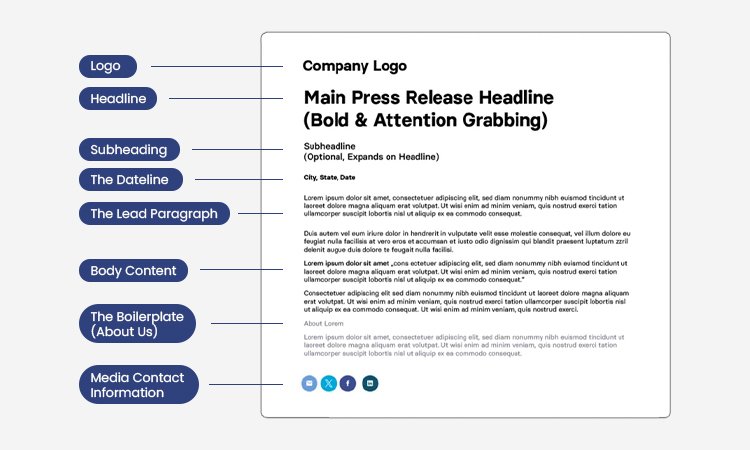
The structure of an ideal press release follows a clear format that journalists prefer. In this section of the blog, we will discuss the most effective structure and content of a press release.
When determining how to write a press release that can gain attention, it is crucial to focus on the first paragraph. The first paragraph of your press release must include the essential 5 W’s:
- What is being announced?
- Who is making the announcement?
- When is it happening?
- Where does it apply?
- Why does it matter?
When writing this paragraph, brands and PR agencies must ensure they include all relevant details without omitting anything. Journalists and reporters scan very quickly. If their queries are not resolved immediately, your press release might get ignored.
- The Structure of an Effective Press Release
Here’s a sample structure of a good press release that journalists prefer:
- Pre-Release Essentials
- Release Timing: This needs to be placed at the top left. State “For Immediate Release” or “Embargoed Until [Date/Time]”
- Company Logo: Place at the top centre for branding.
- The Headline or Hook
- Action: Brands and PR agencies must consider writing a punchy, informative title of about 100-150 characters that clearly summarizes the news.
- Structure: Make use of the active voice and the present tense when writing the headline. Here’s a press release example. Rather than writing “Company X has launched…”, brands and PR agencies should write, “Company X launches…”
- Subheading: Just below the headline, brands must add a one-line subhead to offer additional information without repeating the headline.
- The Dateline
- Format: City, State, or Country- Month, Day, Year
- Example: New York, May 11, 2026
- The Lead Paragraph (5 W’s)
- Goal: The first paragraph must clearly summarize the entire story. Brands and PR agencies must write it in such a way that if a journalist reads this, they will have a clear idea of the whole story.
- Content: This one paragraph must answer Who, What, Where, When, and Why.
- Body Content (The Inverted Pyramid Structure)
- The Second Paragraph: Make sure to clearly explain the “so what.” Why does this news matter? Provide background, current trends, or the problem being solved.
- The Third Paragraph: Brands must include 1-2 sentences of commentary or quotes from a major stakeholder, such as the project lead or CEO.
Pro Tip: Make sure the quotes you are using sound like a real person, adding relevant perspectives rather than just filling up space.
- The Fourth Paragraph: In this section, brands must provide proper evidence for their claims, such as survey results, statistics, or partnership details.
- The Boilerplate (About Us)
- Action: This is a brief, consistent 3-4 sentence paragraph that clearly describes your company, its mission, and its position in the industry.
- Media Contact Information
- Details: This section of the press release includes the name of a specific person, phone number, and email address, so that it becomes easier for journalists to contact them.
Step 4: Make It Interactive By Including Images, Media, and Embeds
Images, media, and embeds in press releases not only enhance visibility and engagement but also ensure media pickup, making it a great PR tactic. Visual content receives 94% more views in comparison to text-only marketing.
A press release without proper images appears incomplete on many websites. Brands and PR professionals must consider at least one high-quality image related to the announcement. The maximum width of the image must be 800 pixels. Using descriptive file names and alt text can heavily boost SEO.
For example, if you are announcing a product launch, include a high-quality image of the product. If you are announcing the hosting of an event, such as a press conference, mention the image of the venue or company logo with prior permission.
Embedding videos in your press release can also add value. A short, engaging video of a product demonstration can strengthen the story. Always make sure the multimedia you are adding is relevant to the story and supports it rather than distracting readers from it.
Step 5: Consider Using Relevant Quotes

Without relevant quotes that offer a sense of personalization, a press release is incomplete. While the rest of the format showcases professionalism, it is the quotes that add a human element, encouraging audiences to connect with the premise even more.
Brands and PR agencies must add quotes that are brief, valuable and directly related to the announcement or news, from company executives, satisfied customers, or industry experts. These can be immensely helpful for building credibility. In this section of the blog, we will discuss how to write a press release by including relevant quotes and the importance of quotes in press releases.
- 4 Major Reasons Including Quotes Matter in Press Releases
- Adds Insights and Contexts: Quotes in press releases clearly explain “Why” the news matters and the broader impact of it, rather than just stating “What” happened.
- Humanize Press Releases: Adding emotions, opinions, and a human voice to press releases can break up technical, robotic, or dry facts.
- Increases Credibility: An authoritative quote from the CEO, partner, or expert acts as an endorsement, carrying more weight than self-promotion.
- Encourages Media Pickup: Journalists often “rip and read” or copy-paste quotes directly, saving their time and making it easier for them to publish. This also increases the likelihood of building robust media relations.
- How Can Brands and Agencies Include Quotes in Their Press Releases?
- Placement: Brands must place relevant quotes from key executives or CEOs right after the introductory paragraph to offer context or clearly convey the importance of the news.
- Attribution Format: When including quotes in press releases, make sure to use “said [Name, Title]” following the quote. For example, “This partnership will reshape industry standards,” said James Collen, CEO of TechCorp.
- Structure: Each quote you include should be treated as its own paragraph.
- Break Down Lengthy Quotes: If a quote is very long, brands or PR specialists must consider breaking it down into two pieces, placing the attribution after the first sentence.
- Context: You should use quotes to clearly express enthusiasm, offer expert opinions on the impact of the industry, or offer insights rather than just stating dry facts.
- Stick to the AP Style Format: Brands must leverage the AP style guidelines for punctuation, attribution, and capitalization to prepare them for media professionals to use.
Step 6: Add Relevant Contact Details
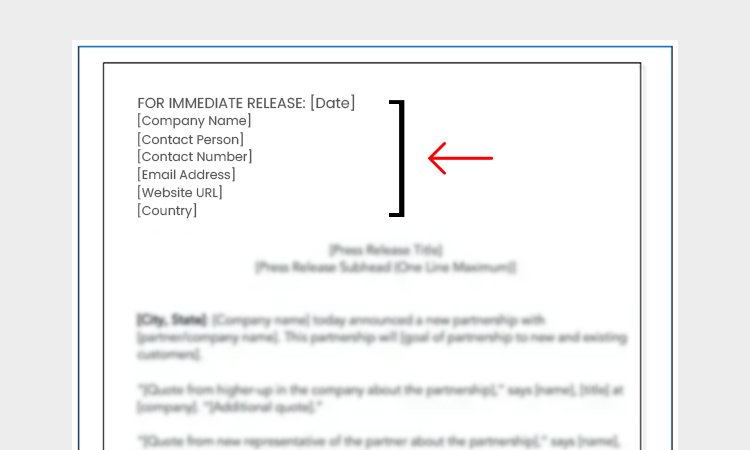
A professional press release must always end with a relevant media contact section. Many press releases miss this part, but it is crucial.
Journalists and reporters should be easily able to reach out to request interviews or verify details provided in the news. Here are a few things the contact section should include:
- Company Name
- Contact Person
- Contact Number
- Email Address
- Website URL
- Country
Including clear contact info in press releases often signals transparency and professionalism.
Step 7: Optimize for SEO

Although we have discussed a small part of it earlier in this blog, in this section, we will take a better look at it. Brands and PR agencies must make sure relevant keywords related to the industry and news are distributed strategically throughout the content.
However, it is important to avoid overstuffing your press release with keywords, as this can not only reduce visibility but also severely hurt SEO efforts. Brands must maintain the keyword density to around 1-2% in order to maintain a balanced approach.
Here’s how brands and PR companies can optimize their press release for SEO:
- Keyword Strategy and Placement
- Identify Keywords Early: Brands must thoroughly research relevant keywords and themes before crafting their press releases, so that they can incorporate the keywords organically in the content.
- Strategic Placement: Make sure to place primary keywords in the title, first paragraph, and the first 100-150 words.
- Avoid Keyword Stuffing: Overusing or stuffing keywords in the press release can make it appear spammy, which can hurt your rankings rather than improving them.
- Content and Structure Optimization
- The “Reverse Pyramid” Structure: Brands must put the most crucial information- what, who, when, where, and why in the opening paragraph, followed by additional details.
- Incorporate Bullet Points: Make sure to break down complicated information to make it easier for search engine crawlers and journalists to read the content.
- Newsworthiness is the Key: Rather than publishing generic corporate news, you must ensure that your press release is actually newsworthy to attract organic media pickup and links.
- Backlink and Anchor Text
- Limit Links: By using a limited number of high-quality relevant links on the website and blog, brands can avoid spam signals.
- Use Descriptive Anchor Texts: When learning how to write a press release, PR agencies or businesses must use branded or natural descriptive anchor text rather than generic phrases like “click here.”
- Develop an Online Press Room: Brands must host press releases in an online newsroom on their website to retain traffic and build internal link authority.
- Multimedia and Technical SEO
- Include Engaging Visuals: When optimizing your press release for SEO, you must consider embedding high-quality images, videos, or infographics that can make your content more compelling.
- Optimize Image Alt Text: Brands must make use of descriptive alt texts of about 4-7 words for images to help search engines easily understand the content of the press release.
- Leverage Videos: You can consider pairing your press releases with interactive videos on platforms like YouTube to maximize visibility and include additional backlink opportunities.
- Distribution and Promotion
- Repurpose Content: Make sure to transform the press release into blog posts, social media updates, and LinkedIn articles to ensure better reach.
- Distribute in Reputable Sources: Brands must distribute their press releases on reputable PR distribution services such as Business Wire and PR Newswire to ensure visibility on high-authority sites.
- Foster Relationships: You must supplement automated distribution with personal outreach to journalists, as earned media links are much more valuable than the paid ones.
- Optimize for AEO (Answer Engine Optimization)
- Focus on Clarity: PR agencies and businesses must frame their content in such a way that it clearly answers specific queries, which can help AI tools and LLMs to better read and understand their press release.
- Include Relevant Data and Quotes: To successfully optimize your press release for SEO, you must make use of relevant statistics and quotes to maximize the credibility of your release, making it more likely to be extracted by AI in answers.
Step 8: Proofread and Ensure Compliance

When you are done crafting your press release, it is time to distribute it. But before you distribute your press release, make sure to go through it carefully.
Check for grammar, confirm all the links provided are working fine, verify the dates, and make sure all the claims made are accurate and legally compliant.
If you are announcing partnerships, fundings, or awards through your press release, ensure including relevant pictures to offer proof wherever possible. Unsupported claims can not only damage trust but also weaken the message of a press release. Proper proofreading and editing can fix any minor, last-minute errors that can hurt your reputation.
Best Practices to Distribute Press Releases Effectively
Once you are done writing your press release, the next step is to distribute it to the media and other stakeholders. How can you do it? Here are some of the best press release distribution practices that PR agencies and companies must follow:
- Target the Right Audience
Targeting the right journalists or media outlets that cover stories relevant to your niche and are likely to be interested in your stories is just the bare minimum. To make sure your story is reaching the right audience, sending your press release to the right news media outlets is a must. Brands or PR specialists can leverage tools like Muck Rack or Cision to find relevant contacts.
- Consider Personalizing Your Pitch
For businesses, writing a press release can help improve visibility without draining their pockets. When developing press releases, make sure to tailor your pitch to each and every news media outlet you are sending it to. You can mention their previous coverage and clearly explain why your news is relevant to their audiences.
- Make Use of a Distribution Service
You can consider incorporating a press release distribution platform like PR Newswire or Business Wire that can help you reach a wider audience and spread your message across multiple media channels.
- Share Your Press Release On Social Media
By sharing your press release on various social media platforms, you can not only reach a broader audience but also engage with your followers effectively.
- Make Sure to Follow Up
After sending your press release, make sure to follow up with journalists and news outlets to make sure they have received it and to answer any queries they may have regarding the news.
- Track Media Coverage
PR experts and brands must track the media coverage of their press release and actively engage with journalists who write about it. Make sure to thank them for covering your story and provide additional information if required.
6 Common Mistakes to Avoid When Developing Press Releases and How to Fix Them
Even in 2026, press releases continue to be one of the most effective tools in public relations. A well-structured press release can not only help build credibility but also earn the attention of the media, which is too difficult to achieve in the highly competitive market.
On the other hand, a poorly written press release can hurt the reputation of your company and take away the opportunity to get media coverage.
Even if you are creating the best press release, minor errors in writing, structure, or timing can get your story ignored. So, here are some of the common mistakes brands and PR agencies must identify while learning how to write a press release:
- Developing Weak and Overly Promotional Headlines
One of the major mistakes that brands and PR experts often make is using jargon, clickbait, or vague headlines that solely focus on “launching” rather than conveying the real impact. For example, “[Company Name] announces the Launch of a New Product.”
How to Avoid It?
In order to write a press release that gets media attention, brands and PR professionals develop a clear, factual, and brief headline that includes a powerful action verb and the core benefit. You can consider using terms like “Unveils” or “Reveals” rather than simply “announces” or “launches.” Focus on the “so what” factor to make people care.
Sample Headline: “Company X Unveils Their Cutting-Edge AI Tool That Reduces Data Processing Time By 50%”
- Choosing To Cover Topics With No News Value
Issuing a press release to share minor internal updates, such as basic staff hires, low-level partnerships, or regular website updates, is one of the major mistakes people make when writing press releases. This is because it heavily dilutes brand credibility.
How to Avoid It?
Brands and PR agencies must ensure the topic is timely and relevant to the external audience. Ask yourself whether it clearly showcases a significant milestone, a large-sample survey, the launch of a new product or service, or a major industry shift. If your news does not convey any of these, it is best not to issue the press release.
- Poorly Created Structure and Formatting
Having a clear idea about how to write a press release with the right structure and format is crucial. Writing long chunks of paragraphs, missing subheadings, or failing to follow the “inverted pyramid” structure, which places the most crucial information at the top.
How to Avoid It?
When developing press releases, businesses and PR agencies must use the inverted pyramid format (Headline> Subheadline> Lead Paragraph> 2-3 supporting paragraphs> Company Boilerplate). Make sure to keep the paragraph short and make use of bullet points for key details to ease readability.
- Completely Skipping Adding Multimedia
Issuing a text-only press release can make it difficult for PR agencies and brands to get noticed by reputable journalists. Not including multimedia like images and infographics can make a press release less appealing and reduce the chances of getting coverage.
How to Avoid It?
Including high-resolution images of products, compelling infographics that summarizes data, and short B-roll video clips can offer an immersive experience. According to statistics, press releases that included images received an average of 1.4 times more views than text-only releases. In 2026, including multimedia in press releases can maximize engagement by breaking down complex information into easy-to-understand details for the audience.
- Not Targeting Accurately and Wrong Sending Time
Sending a generic, one-size-fits-all press release to a massive list of journalists is baseless and signals low-quality outreach. Furthermore, if a brand or PR agency sends press releases on Fridays, weekends, or during major national holidays, it is likely to end up getting buried or ignored.
How to Avoid It?
Taking time to research and target journalists who specifically cover your niche is a must in order to make sure your press release reaches the right audience. Personalize your pitch to the recent work of the journalist you are willing to target, and consider offering an exclusive to one or two journalists rather than blasting hundreds of journalists with your content.
In order to make sure your press release is getting enough attention, consider distributing it midweek, between Tuesday and Thursday, ideally in the morning. Brands must avoid sending out press releases during busy news cycles to make sure their story stands out.
- Not Adding a Clear Call to Action in Press Releases
Leaving journalists or readers wondering what to do next, or not adding crucial contact information, is one of the biggest mistakes people make when crafting press releases.
How to Avoid It?
Brands and PR agencies must consider including a brief “Media Contact” section with their business name, relevant email address, and accurate contact number. Make sure to embed a clear, direct CTA in the press release, such as a link to a landing page, a product demo request, or instructions for interviewing a spokesperson.
FAQs
Ans. The ideal time to send a press release is Tuesday or Wednesday morning between 7 A.M to 10 A.M local time for the target journalist. Sending a press release early to mid-morning allows a journalist to review the news as they start their day, while avoiding the hassles of Mondays and the winding-down nature of Fridays.
Ans. Press releases that generally range from 300 to 500 words are usually considered the most effective. This is usually referred to as the “sweet spot” to ensure the content is easily readable, scannable, and actionable.
Ans. For the majority of brands, the optimal frequency for sending press releases is one to four times per month, focusing on quality over quantity.
Ans. The debate on how to write a press release that is newsworthy is getting fiercer. A press release is considered newsworthy if it offers timely, relevant, and valuable information that affects a wide audience, rather than solely the company that is issuing it.
Ans. To measure the effectiveness of your press releases, you must monitor significant business outcomes rather than just measuring the output volume. Key metrics to measure the efficiency of your press release include analyzing media pickups, tracking website traffic via UTM parameters, monitoring backlinks for SEO value, and measuring audience engagement on social media platforms.
Conclusion
An effective press release must have a clear structure and purpose. When you choose a “newsworthy topic” for your press release and present all the details clearly, your message becomes easier for journalists or news media outlets to read, understand, and publish.
However, a lot of businesses and PR professionals still have this confusion about how to write a press release that can actually make news channels care to read and cover.
By implementing the best press release writing practices mentioned above and avoiding the common press release writing mistakes, businesses can not only build brand awareness but also establish thought leadership and attract new customers. In case you are someone who is just starting out and has no idea how to start writing high-impact press releases, you can perhaps consider personalized press release writing services.
