







PR for startups is not something that is just nice to have; it is a marketing tool that is crucial for business growth. Startup companies often have big stories to tell, but getting heard in the highly competitive market can be very difficult.
By implementing a good PR strategy, startup companies can not only elevate their brand awareness and help reach a wider audience but also have the potential to boost conversion rates. According to this statistic, the public can generate 10 to 50 times more conversion rate in comparison to paid advertising.
So, if you are someone who is looking to increase their conversion rates and expand their reach, then this blog is for you. It will provide a clear idea of what public relations is for startup businesses, reasons why startups need PR, best PR practices, and more. So, ready to get started?
What is PR for Startups?
Public relations for startups is the strategic use of media and thought leadership to build credibility, visibility, and reputation, rather than relying on direct sales. To foster trust among potential customers, PR leverages third-party validation, such as thought leadership, news features, and media coverage.
An effective public relations strategy can help new businesses to get featured in popular industry publications, position their founders and executives as experts in the industry, and achieve validations from third-party sources that can encourage investors to fund, customers to buy, and partners to collaborate.
6 Compelling Reasons Why Startups Must Invest in PR
Now that you have a clear idea of what public relations is for startup businesses, let’s find out why startups must consider incorporating this digital marketing strategy:
- Building Brand Recognition Even Without Existing Credibility
The majority of startups fail not because their products and services are bad. But because no one knew they existed. In the highly competitive market, standing out and getting the attention of the right customers has never been so difficult.
Without an existing customer base, new businesses often lag behind in terms of customer reviews, investor profiles, and revenue stats compared to large-scale, established corporations.
PR acts as a powerful tool in this case. It helps foster trust through effective storytelling, expert opinions, and media features.
- Greatly Amplifies Brand Visibility
In an overcrowded market, simply having a product or service is not enough. Prospective customers should know that your company exists. Effective PR can position your startup business in the spotlight, exposing your brand to a wider audience through strategic media placement and consistent messaging.
Public relations goes beyond basic advertising to ensure your startup business appears in media searches and online conversations, making your brand more discoverable.
- Helps Captivate the Attention of Investors
Investors and venture capitalists often receive thousands of pitches annually and often look for validation before they invest in a startup.
Regular media coverage can showcase that a startup is achieving momentum and is worth the attention. Consistently appearing in renowned media outlets can help create a “fear of missing out” among investors, making them more likely to discover a startup that is already a buzz in the town.
- Effectively Managing Crisis Communication and Reputation
Startups are more exposed to crises in comparison to large-scale corporations. A small mistake or a negative review from a valuable customer can immensely hurt the image of a newly launched brand.
By successfully implementing PR for startups, they can help build a proactive crisis management plan to deal with negative press and shape the narrative.
A positive and well-established public image can give companies a “Safety Net” if something goes wrong, allowing them to act fast.
- Driving Long-Term Business Growth
PR is not just about a temporary buzz. It is a long-term investment that focuses on building brand equity that supports sustainable goals like talent and customer acquisition.
Public relations can help in attracting high-quality leads and prospective customers who value reputation. A robust reputation within the media can make it easier for startups to attract top talent who want to work for reputable and trusted companies.
- Building Thought Leadership for Startups
Through effective public relations, startups can position their founders and major executives as experts within the industry rather than as sales-driven individuals.
Through guest columns, appearing in relevant podcasts, and speaking engagements, startups can share their unique visions and opinions. This digital marketing strategy differentiates a startup from its competitors by emphasizing the “Why” and the experts behind the company rather than simply listing its own features.
10 Effective PR Strategies For Startups to Attract Investors
To do PR successfully, startups must start by establishing clear, well-defined goals and a story that is shareworthy. Rather than focusing on unnecessary things, startups must focus on who needs to hear it and why it will matter to them.
So, in this section of the blog, we have discussed the 10 best PR practices that startups can incorporate to attract investors:
- Set Up Business-Aligned Public Relations Goals

This is a very important public relations strategy for startups. Effective PR will only yield effective results when you know exactly what you want to achieve. Startups often make the mistake of jumping straight into pitching without being clear about what they want. However, setting up unrealistic goals can not be very effective either, as vague goals often lead to vague results.
Think about your specific goal or what you want to achieve through your PR campaign. Potential goals for startups include:
- Improving or reshaping the reputation of your company
- Drawing attention to a latest product launch or the introduction of a new feature
- Getting the attention of new employees
- Finding the right investors and stakeholders
- Boosting the online visibility of your startup company
- Demonstrating your authority by sharing prestigious honours or recognitions
NOTE: When determining their PR goals, startups must remember that each goal demands tailored messages, different media outlets, and an approach.
- Clearly Define your Story and Unique Value Proposition
This is one of the most important strategies of PR for startups. What are startups without an engaging story and a clear USP to attract the attention of potential investors and the media? In order to grab the attention of the right audience, having a compelling brand story and a clear value proposition is a must.
And for this, startups are required to establish a solid brand identity. Determine what makes your startup company stand out from the others in your niche and convey it in a way that aligns perfectly with your target audience.
Understanding the major pain points of your audiences and addressing them directly through your story can help build emotional connections- making your story newsworthy.
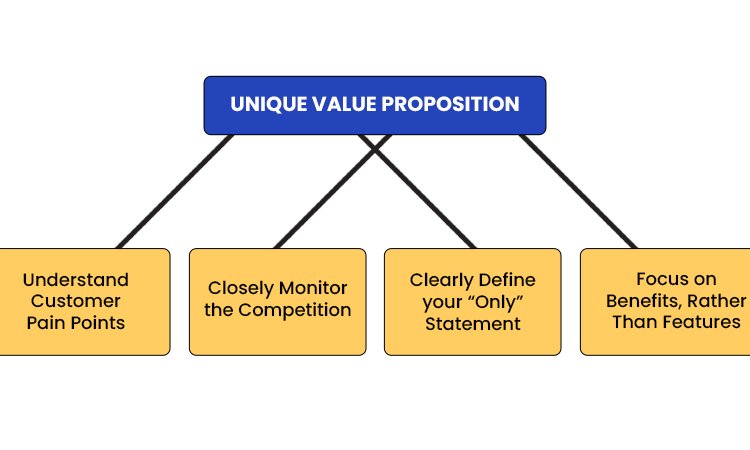
Here is a structured approach on how startups can convey their brand story and unique value proposition to their audience:
- Define your Unique Value Proposition
The unique value proposition of your business is the most important aspect that sets your startup brand apart from others.
- Understand Customer Pain Points: Startups must leverage customer research, social listening, and surveys to determine the unique, serious problems that customers are facing and seeking solutions for.
- Closely Monitor the Competition: A great way to convey your USP is to develop a competitive matrix to see what your competitors are offering and determine gaps in their approach.
- Clearly Define your “Only” Statement: Make sure to showcase why you are the only startup company that can solve the problem of your audience in a specific way. For example, if you are an AI-based startup company, then you can say, “The only AI-powered platform that automatically adjusts machinery settings in real time to prevent production defects even before they occur.”
- Focus on Benefits, Rather Than Features: As a startup business, you must showcase the achieved results rather than highlighting just technical specifications. For example, “Personalize content generation that can boost engagement by 3X.”
- Create your Brand Story
Humans are more inclined to respond to stories that are more memorable than generic facts. Here’s how startups can develop their brand story to captivate the attention of their audience.
- Create the Origin Story: To define your story effectively, you must share the “Why” behind your startup. Share the personal experience, challenge, or inspiration that led to this foundation.
- Determine the Industry Villain: Startup companies must clearly state the problem or inefficient legacy system that they are committed to solving.
- Emphasize on Authenticity: When creating your brand story, make sure to avoid hype-driven language. Rather, tell a genuine, emotionally compelling story that evokes interest and showcases your commitment.
- Create a “Now or Never” Moment: Make sure to focus on illustrating why solving this problem cannot wait, showcasing the high cost of inaction for your audience.
- Determine your Current Position in the Market

One of the major mistakes that startup companies often make is jumping into public relations without having an idea of what is out there for them. It is not possible to create the right PR strategy if you do not know your starting point.
And without a proper baseline, startups might end up missing out on easy opportunities to stand out from their competitors. So, before starting to create connections with renowned journalists and influencers, it is important to closely monitor where your brand is positioned in the market.
- Establish Strong Media Relationships Rather than Mass Outreach

Journalists are always on the go; they receive thousands of news stories every day. If your story is not relevant to them, then it is likely to get ignored.
So, instead of reaching out and sending stories to every journalist and media outlet, startup businesses must focus on establishing powerful relationships with niche-specific journalists and media professionals. This is one of the most important strategies of effective public relations for startups and should not be neglected.
To ensure effective PR for startups, you do not need thousands of journalists or media outlets covering your story; you just need 20 to 30 people who consistently cover your industry. If your story ends up in the wrong inbox, then all your efforts will go in vain.
So, in this section of the blog, we will discuss how startups can choose and build relationships with the right media professionals:
Step 1: Choose the Right Journalist or Media Outlet
Instead of blasting every other journalist with press releases, startup companies must leverage a “Sharpshooter” approach to identify the right journalist for their niche. How?
- Target by Niche: Startups must evaluate and reach out to journalists who have previously covered stories from your industry, stories of your competitors, or similar startups. For example, AI or Fintech.
- Leverage Advanced Research Tools: You can utilize tools like Muck Rack, Cision, or LinkedIn to determine writers who currently cover topics in your niche.
- Focus on Journalist Fit: Startup businesses must consider seeking out reporters whose past work suggests that they can offer valuable insights and relevant context to your expertise or sector.
- Start Small: Rather than focusing on getting the attention of popular media outlets or journalists, startups must start with regional blogs, industry-specific trade publications, or niche websites that often look to cover small businesses rather than large corporations.
Step 2: Establish Relationship Before Pitching
Due to their busy schedule, journalists are most likely to respond to businesses or companies with which they have a known contact. So, in order to build a strong relationship with the media, startups must create a rapport first.
- Engage on Social Media: Don’t make it look creepy by stalking them on social media. Rather, startups must connect with renowned journalists on social media platforms like Twitter and LinkedIn. They can do this by sharing their articles that you find relevant, writing thoughtful comments, and engaging with all their content- not just the promotional ones.
- Be an Authoritative Source, Not Just a Pitcher: In order to build meaningful relationships with the media, startup companies must present themselves as an expert source for stories and not just their startup. Provide valuable data and insights on emerging industry trends to help them develop their stories.
- Humanize your Brand: Journalists are busy people. If your story is getting covered by them, then take the initiative to thank them by sending a brief and thoughtful thank-you email right after they have covered your story.
Step 3: Develop Effective Pitches
When you are planning to reach out to journalists and media outlets, make sure to make the pitch personalized and irresistible.
- Tailor your Pitch: Startups can reference recent articles the journalist has published in their opening line to prove that you know their work.
- Emphasize on the “So What?” Make sure your story directly answers why it matters to the readers, rather than focusing solely on highlighting your products or services.
- Offer Exclusives: Offering a story exclusively to one reporter often leads to better, comprehensive coverage, fostering trust.
- Keep it Short: Like we already mentioned before, journalists receive a huge number of emails every day. A short, 100-word pitch can be more effective than a lengthy and complicated press release.
Step 4: Maintain a Long-Term Relationship
Maintaining a long-term relationship with journalists is one of the most crucial aspects of PR for startups. Fostering a strong connection with the media is not a one-time investment; it is a long-term investment. Here’s how startups can maintain a strong relationship with the media.
- Offer Value Regularly: Even if you are not looking to get your story covered, you can still share valuable information, data, or market updates regularly to journalists. This can foster personal connections.
- Be Responsive: Startups must have subject matter experts available in order to respond promptly and professionally to follow-up queries, especially in case of time-sensitive stories.
- Develop a Press Center: Make sure to maintain a “Press Section” on your business website with high-quality images, relevant FAQs, and founder bios to make it easier for journalists to get information.
- Avoid Ghosting: The majority of businesses often end up making this mistake. After a big story, do not disappear. Rather, continue the relationship with the journalist. Reach out to them gently, congratulate them on their future work and keep them updated on your achievements.
- Position your Founders and Executives as Thought Leaders

Positioning the founders and executives of your startup company as trusted sources in the industry is a crucial public relations strategy, as it establishes deep trust and credibility through more humanized, expert authority rather than just marketing.
Thought leadership can transform your startup business from a sales-driven entity to a respected voice in the industry.
- Key Strategies to Position the Company CEO As Credible Leader
In this section of the blog, we will discuss how startups can place their founders and key executives as an authoritative source in the industry.
- Define the CEO’s Personal Brand
A robust thought leadership strategy often starts with a clear understanding of the unique perspective of your founder.
Consider asking them,
- What topics are they passionate about?
- What experience sets them apart?
- What voice and tone feel authentic to them?
Startups must consider conducting a messaging workshop in order to align on major themes such as leadership, innovation, digital transformation, or niche-specific trends. The goal is to define a specific trend. The main aim is to define a specific point of view that feels both personal and aligns perfectly with your startup company’s mission.
- Develop a Strategic Content Plan
Do you know that over 70% of decision-makers read thought leadership content in order to stay updated on the latest industry trends and achieve new ideas and insights for their business? Creating consistent, authoritative, and high-quality content is the secret behind every thought leader.
By creating and publishing valuable content such as whitepapers and blog posts consistently, startups can easily solve genuine audience problems rather than simply selling.
Type of content startups can create to position their founders as thought leaders:
- LinkedIn posts
- Executive blogs
- Byline articles
- Guest appearances on podcasts
- Sharing valuable insights and opinions
- Leverage Both Earned and Owned Media
A multi-channel approach can be very effective as it can help elevate your founder’s voice. Startups must start by optimizing their own platforms like social channels and blogs. Then, pitch the CEO as a subject matter expert to relevant podcasts, industry publications, and event organizers.
Incorporating earned media can build credibility, while owned media can help startups shape the narrative. When integrated together, these two can heavily contribute to growing influence.
- Reach Audiences Through Social Media
To reach the right audience through social media, startups must first create a solid strategy, identify their niche, clearly define their audience, and create high-quality content. Publishing this content is not where it ends.
Even by incorporating the most effective SEO practices, startup companies cannot assume that their audiences will find their business without any hassle.
Social media allows startup businesses to share and elevate their content. Not only that, but these platforms can also offer significant opportunities to engage in ongoing conversations within your industry. In these platforms, startup businesses can engage with fellow thought leaders within the community as well as collaborate with experts.
- Consider Executive Media Training
To ensure successful PR for startups, providing media training to key executives is a must. If you try listening to the backstories, even the most visionary CEOs require refining their on-camera presence. By offering comprehensive training for media and speakers, startups can make sure their executives are clear, confident, and well-prepared, especially during high-value interviews or public appearances.
When offering media training to executives:
- Key message development
- Dealing with tough queries
- Tone and body language
- Delivering engaging sound bites
Confidence is the key- make sure the founder of your company shows up like a pro.
- Track and Modify
Thought leadership is not a one-time investment. It needs constant monitoring and refining. Startups must leverage metrics like social engagement, voice of search, media mentions, and website traffic to determine the impact.
Implementing tools like SEMrush and Meltwater can help startups track performance across various channels.
Stay updated- evaluate what is resonating the best with your audience and refine your strategy accordingly. In a world filled with digital noise, a founder’s thought leadership can offer exceptional opportunities to cut through the noise easily.
- Build Meaningful Influencer Partnerships

This is one of the major strategies of effective public relations for startup companies. Influencer outreach allows startups to reach and engage with a wider audience. To ensure successful influencer partnerships, startups must look for influencers who match their brand identity and have a good, relevant audience.
Here’s how startups can establish meaningful partnerships with influencers:
- Identify and Pitch the Right Influencers
- Focus on Niche and Resonance: For effective public relations, rather than focusing solely on follower count, startups must look for influencers whose content directly corresponds to the industry, brand value, and target audience demographic of your startup company.
- Prioritize Engagement Rate: Startups must evaluate the quality of engagement, such as comments, shares, and mentions, rather than just likes. This is because it highlights true trust.
- Leverage Tools for Vetting: When considering influencer outreach, startup companies must leverage platforms like Social Blade or Plixxo to determine audience demographics and audience growth.
- Evaluate “Brand Love”: Make sure to identify influencers who already use or have genuinely mentioned your products, services, or solutions similar to the ones you offer.
- Create Personalized Outreach
- Avoid Using Generic Templates: Startups must send personalized emails or DMs clearly explaining why they value an influencer’s content. This makes the partnership feel more genuine instead of making it look like a regular transaction.
- Offer Value First: Make sure to offer influencers regular access to your products, services, free samples, or exclusive industry data to provide an engaging reason for collaboration.
- Be Genuine: Clearly state the purpose of the collaboration and initial, high-level expectation. For example, brand ambassadorship or product reviews.
- Develop Genuine Collaboration
- Focus on Creative Freedom: When partnering with famous influencers, startups must create content in their unique style as they know their audience the best. Too much scripted content might lead to inauthentic and uninteresting content that often gets ignored by audiences.
- Co-Create Content: Startup companies can collaborate on ideas, such as behind-the-scenes, stories, tutorials, or live Q&A sessions, to integrate your brand message with their unique voice.
- Aim to Foster Long-Term Partnership: Instead of going on and off with posting, startups must cultivate ambassadors who can promote their product consistently, which can help build trust and credibility.
- Shape the Partnership to Ensure Success
- Leverage Clear Contracts: Startup businesses must clearly define deliverables, compensation, advertising disclosure requirements, and content usage rights.
- Performance-Based Models: In the case of tight budgets, startup companies can make use of affiliate marketing by offering content creators discount codes, paying them commissions only when they are generating sales.
- Leverage “Creator Licensing”: New businesses must run advertisements through the social account of the influencer you are partnering with in order to gain higher trust and engagement rate.
- Measure and Optimize
- Monitor Relevant Metrics: Go beyond vanity metrics to monitor conversion metrics, such as website traffic from sales, unique links, and brand mentions.
- Implement AI Tools: Startups must incorporate AI-powered platforms like Averi AI or Trackier to ease content review, communication, and performance tracking, especially for small startup teams.
- Optimize Based on Data: Make sure to regularly assess which influencers ot content format is driving the best returns on investment and assign resources accordingly.
- Showcase your Awards and Recognitions

In the highly competitive market and the increasing number of startups, people are left with an overwhelming amount of choices.
In order to gain the trust and attention of potential investors and top talent, startups can use a strategic weapon- flaunting their awards, recognitions, and endorsements. This is a vital strategy for PR for startups that can help build trust and credibility.
- Reasons Startups Must Include Awards and Recognitions in Their PR Strategy
Awards basically act as proof that you are good at whatever you do. In the majority of PR strategies, highlighting rewards has become non-negotiable, as they offer exceptional opportunities to make your startup company stand out from others and receive recognition for your company’s achievements.
- Highlighting your Case Studies and Campaigns
Awards are a great way to highlight your achievements- whether it is for a successful campaign, outstanding product or service. By showcasing awards and recognitions, startups can build trust among potential clients and make their brand stand out from their competitors.
In the ever-evolving marketing landscape, it is quite a task to capture all the hard work that you have done so far. And trying to gather materials and information, even a few years after the work occurred, can be frustrating.
Having an awards program incorporated throughout the year demands the collection and access to your campaigns. This is because the majority of awards require proven results and a comprehensive synopsis.
Startups can repurpose award submissions for case studies that can be published on your website or added to a new sales pitch.
- Demonstrate Your Achievements
Whether you are displaying your awards or recognitions on your website or social media platforms like Facebook or LinkedIn, especially for startups that are just getting into the market.
Awards serve as evidence of the quality of your work, strengthening your value proposition to your clients, stakeholders, and partners.
No matter what industry your startup company falls into, displaying relevant certificates, mementoes, or medals can be an exceptional way to attract the attention of your audience and instantly provide validation.
Startup companies must proudly display their awards and recognitions in the banner of their websites, advertisements, or any promotional materials.
- Improving Online Visibility and SEO
By engaging in relevant award shows, startups cannot only boost their chances to win, but it also serves as a great platform to build strong connections and networks, and allow brand promotion directly.
By capturing behind-the-scenes photos and videos of your employees and company, startups can captivate with the hype these events can generate.
With everyone talking about the award event, it will get more media coverage, which startups can leverage to enhance their website’s SEO.
Good media coverage of award wins can significantly elevate reach, exposing a specific brand to newer and wider audiences.
- Customer Retention and Employee Recruitment
If you think awards are just for external marketing, then that is not true. They come with several significant benefits, including customer retention and talent recruitment.
Acknowledging and celebrating prestigious awards can boost morale among employees and increase patient satisfaction.
Furthermore, demonstrating awards and accolades can help startup companies attract top talent and retain employees who are proud to be working for a winning organization. Showcasing the achievements of your startup company during a recruiting process can make your brand stand out to the top talent.
- Focus on Developing Compelling Press Releases

According to Cision, 74% of journalists like to receive press releases or new announcements from brands. This statistic shows why every business must create and send engaging press releases to journalists and reporters. Not only that, but developing press releases is also one of the major strategies of effective public relations for startups.
Press releases act as a primary tool for startup businesses to gain media coverage, establish brand credibility, and shape the narrative. By successfully incorporating PR for startups, they can not only drive brand awareness but also enhance their SEO and online visibility.
However, many startups often mess this up because they do not understand the right approach to creating a valuable press release. In this section of the blog, we will provide a step-by-step guide on how to develop press releases that are not only engaging but also valuable to journalists:
- Create a Headline that Signals News
For press releases, a newsworthy headline matters most. Journalists are always on the go; they would only click open a story that feels newsworthy to them. Startups must make sure that their headline is a factual statement rather than a generic marketing claim.
- The Lead Paragraph Must Contain the Story
In public relations, the lead paragraph of a press release is often referred to as a 5W Lead, as it must contain all the W’s (Who, What, Where, When, and Why) and include even a sixth “So What?”
Now, how would you know if your lead paragraph is well-written? An effective lead paragraph should provide enough detail so the reader does not need to read the rest of the release to understand what the story is about.
- Create Body Copy that Establishes Credibility
Once done with creating an effective lead paragraph, startups must start building credibility for their brand and company in the body of their press release. The body copy must contain facts, relevant statistics, and quotes from third-party verification of the story.
Startup businesses can make use of clear sentences and easy-to-understand wording with a strong emphasis on offering fresh and valuable information. The success of your PR campaign depends on the ability to offer a robust foundation for the story, both for the journalist and editor who will review and publish the content.
- Use Non-Human Quotes
One of the major mistakes that startup companies often make is including quotes that do not sound human. For example, “We’re thrilled to share with you……” is one of the most used phrases that feels and sounds very non-human.
Startups must make sure to incorporate quotes that are meaningful, relevant, and personal. Those that clearly highlight an individual’s unique insights, vision, or perspective through a person’s words.
- Do Not Forget to Include Crucial Updates on Brand
The “About Us” section of a press release is vital and showcases the long-term history of your startup company. In this section, startups must include all the necessary information about their company: Who they are, what they do, what sets them apart, and where they are located. Therefore, businesses must make sure this section of the press release is completely factual and consistent.
- Participate in Relevant Industry Events

Industry events have evolved as one of the major PR tools in the modern day. They can offer a great opportunity for startups to interact closely with major stakeholders, including investors, journalists, and potential customers.
Whether you are launching a new product or service or showcasing your brand, events serve as a great platform for storytelling. This is one of the major startup brand building PR strategies that cannot be ignored.
So, let’s take a closer look at how participating in events can benefit startup companies:
- Offers Higher Visibility: Events offer an exceptional opportunity for startups to boost the visibility of their brand. By participating in meaningful industry events, startups can increase the reach of their brand, further enhancing conversion rates. High-profile participation can put your startup company in the spotlight, increasing awareness among the targeted audience and attracting media coverage.
- Strengthens Startup Media Relations: By engaging in events, startup companies can get a concentrated opportunity to meet renowned journalists and influencers in person. This can help transform professional connections into long-term advocates.
- Establishes Trust and Credibility: Participating in panels, podcasts, or sponsorships can position your startup company as a thought leader and subject matter expert, building “earned” trust that paid advertising often fails to buy.
- Helps with Direct Engagement: Face-to-face interaction can help startups to foster personal brand experiences, fortify bonds with clients, partners, and community members in a way other PR strategies cannot.
- Major Strategies to Leverage Industry Events for Public Relations
Here are a few best practices to use industry events for effective PR for startups:
- Well-Defined Pre-Event Planning and Management
- Align Goals with Business Objective: Startups must define clear, measurable goals such as lead generation, media coverage, and brand awareness. Pick events where your target audience is present rather than going for a large crowd.
- Start Early and Establish Momentum: Initiate media outreach 6-8 months in advance for major events. Startups must consider setting up meetings, interviews, and features even before the events begin.
- Secure a Position in Podcasts: Startups must actively pursue panel, keynotes, or workshop spots to build thought leadership. Presentations that contain authentic research often generate significantly more media coverage.
- Develop Personalized Content: Make sure to go beyond mass press releases. Create personalized pitches for specific journalists who are covering the event you have participated in.
- On-Site Execution and Engagement
- Host Engaging Experiences: Instead of setting up a generic or passive booth, startup companies must offer clear demonstrations or mini-consultations in order to create a memorable experience for their audiences.
- Interact More with the Media: Startup companies must organize a media day, media briefings, and press conferences in order to deliver major announcements directly to journalists.
- Engage Directly with Attendees: Make sure to offer engaging booth experiences, such as live demonstrations, to make your brand more memorable.
- Leverage Social Media in Real-Time: Startups can go live during interviews, share major moments from panels and leverage influencers to elevate reach throughout the event.
- Network with Purpose: Make sure to focus on quality with industry peers and potential partners rather than simply going around collecting business cards.
- Post-Event: Sustaining Momentum
- Capitalize on Momentum: Startups must develop a follow-up press release or blog post that summarizes major moments, insights, and media coverage that their event achieved.
- Personalize the Follow-Up Process: Make sure to send personalized thank-you notes to every media member and contact that you have made at the event. By sharing event highlights with all the attendees to maintain a close relationship with them.
- Measure Impact: Make sure to assess the success of the event by tracking major metrics like the sentiment and volume of the media coverage, lead generation, and social media engagement rate.
- Repurpose Old Content: Startups can repurpose video highlights and speaker insights across various social media channels to leave a lasting impression of the event.
- Optimize your PR Campaigns Through Constant Measurement

Public relations ideally focuses on visibility and influence. However, to determine whether or not your campaigns are working fine or not can be quite challenging.
So, let’s take a look at how startup companies can measure the success of their public relations campaign using both traditional ways and digital analytics tools.
Before you even start to measure the success of your PR efforts, you need to define it. The best PR campaigns start with clear objectives that directly connect to business outcomes.
If you do not have a set goal, even your most creative PR campaigns can appear successful while they are missing out on a lot.
Every public relations campaign must serve a significant purpose. If you wish to boost your brand awareness, then you must focus on earned media coverage. On the other hand, if looking to announce corporate news, startups must then focus on shaping the perception of stakeholders or attracting investors.
When your PR efforts align with your business goals, measuring them becomes even more seamless and meaningful.
Here are some of the major objectives for effective PR for startups:
- Brand Awareness: This objective includes expanding recognition through digital presence and media coverage.
- Reputation Management: Boosting trust, sentiment, and credibility
- Lead Generation: Generating traffic and interest in owned media channels that support sales.
The earlier you define these objectives, the stronger you create a foundation to ensure accurate measurement.
- Major PR Metrics that Startups Must Track
These are some of the metrics that matter the most when assessing campaign performance:
- Media Coverage
Startup companies must monitor the quality and number of media mentions that their campaign has earned. Startups must not just assess how many media outlets have covered their story, but they must also evaluate the platform where your story is appearing.
Coverage is a top-tier publication that carries more weight than a blog, which comparatively has a lower reach.
- Share of Voice
This is one of the most crucial metrics of public relations for startups. Make sure to compare the online presence of your startup company to that of your competitors within the industry. The Share of Voice metrics signifies how solid your narrative is in the heavily competitive market.
When measured over time, this metric can provide insights into whether or not your PR campaigns are helping you to gain attention or lose it to competitors.
- Referral Analytics or Website Traffic
One of the major indicators of PR success is measurable movement on your owned channels. Startups must leverage web analytics tools to monitor referral traffic from media coverage or press releases. A significant increase in organic or direct traffic right after a campaign launch often indicates strong audience engagement.
- Social Media Engagement and Amplification
Track shares, likes, mentions, and comments that are related to your PR campaign. Higher engagement highlights the fact that your content is resonating well with audiences and encouraging conversions.
- Sentiment Analysis
This metric is the understanding of sentiment or emotional response that is often ignited by your PR campaign. Sentiment analysis can help startups determine how their company is being presented externally. Is it positive, negative, or neutral?
- Reach
This is the total number of unique users who have come across your content. Measuring reach is crucial as it can help determine your wider audience.
Major Do’s and Don’ts of Startup Public Relations
No matter how good your PR efforts are, they will definitely fall short even if you make the tiniest mistake. These mistakes are often made by a lot of businesses; however, they can severely affect your public relations.
So, here are a few do’s and don’ts of public relations that startup businesses must consider:
- Do Not Try to Sell Your Products or Services
Journalists are not an extension of your sales team. They will be least interested in knowing the features of your products or services, and more interested in the benefits they will offer to audiences.
Every product or service in the market has a competitor. Startups must avoid telling a reporter or journalist that their products or services are the only ones of a kind, as it might sound like they are bragging about their offerings.
- Reach Out to Journalists Only if you have a Newsworthy Story
Modern-day journalists are always busy. To ensure effective PR for startups, rather than blasting reporters or media outlets with generic stories every now and then, startup companies must focus on creating press releases that are valuable, interesting, and correspond to the audiences of the journalists.
Startups can send press releases on concrete milestones they have achieved, major product or service launches, new partnerships, or valuable data-driven insights.
Make sure your stories are not too lengthy (approximately 300–400 words). This is because shorter, personalized stories often generate better returns than long, generic ones.
- Do Not Ignore Crisis Preparedness
Let’s face it. No business is resistant to crises. How you manage them determines the future of your brand. In order to prepare your business for the worst, having a well-defined crisis management plan is a must.
By developing a solid crisis management strategy, addressing potential scenarios, and aligning strategies, it is crucial to effectively manage crises.
Remember, simplicity is the key. So startups must break down the complicated crisis management framework into easily understandable steps, ensuring their team of professionals is fully prepared to directly address any challenges that may arise in the future.
By responding promptly and professionally, startups can effectively reduce damage and maintain the trust of the public.
- Avoid Using Jargon in Your Pitch or Press Release
Journalists hate words like “innovative,” “revolutionary,” “pioneering,” “transformative,” or “game-changing.” So, when creating a pitch, startups must avoid incorporating irrelevant jargon and keep the pitch short, clear, and simple.
Moreover, startups must avoid using industry jargon such as “Bootstrapping” or “De-Duplication.’ As these might confuse journalists, making them ignore your story.
- Make Sure to Focus on Quality Over Quantity
One well-placed article in an authoritative, targeted publication is worth more than 10 mentions in irrelevant blogs or articles. Startups must create a small, targeted list of reporters rather than irritating journalists by sending mass, generic emails.
One exceptional article about your products, services, or founders that clearly reflects the mission and vision of your startup company is enough to create a long-lasting impression on your clients.
- Do Not Share Fabricated News with the Media
Never lie or exaggerate, as this might severely harm your reputation and erode the trust of your audiences, which is difficult to reclaim. You might want to share a vision of how huge your company might be in three years or to announce that you will be introducing certain features soon.
But startups must share only what “Is” there in the present. Make sure to avoid using false claims or unrealistic estimates.
FAQs
Ans. Digital PR focuses on securing online editorial coverage to enhance SEO, authority, and organic traffic, whereas traditional PR prioritizes building brand awareness through offline media such as radio, television, and newspapers.
Ans. Yes, public relations, especially digital PR, is a very effective tool to accelerate the SEO performance of a startup. Effective public relations can help establish credibility, off-page authority, and brand signals that are used by search engines like Google to rank websites higher.
Ans. Public relations campaigns often take three to 6 months to show desirable results. Although to witness high-impact results, startup companies must have to wait for at least one year.
Ans. Startups can allocate at least 5% to 10% of their total marketing budget to public relations. Early-stage companies often spend under $10K- $50K initially on targeted, high-impact PR campaigns.
Ans. Budding businesses should run PR campaigns consistently rather than sporadically, with a strong focus on building momentum over time rather than just one-off announcements.
Conclusion
Startup founders usually think they can do PR themselves. That might work fine in the beginning, but once you are getting ready for a big launch, it might become a distraction. Chasing journalists to cover your brand story or publishing press releases every now and then won’t work. This is where PR for startups comes into play.
By incorporating the pr strategies mentioned above, startups can not only boost their online visibility but also foster strong relationships with relevant journalists and influencers, helping them reach a wider audience. If you are trying to get started with public relations but don’t know how, then we recommend that you partner with a professional PR agency that offers personalized public relations for startup businesses.
