

Modern-day customers simply want the best for themselves. So, in order to get the attention of customers, brands need three crucial things: credibility, visibility, and loyalty. Businesses usually rely on two powerful strategies for this: advertising and PR. This is where the debate of PR vs advertising arises.
Even though both tools are very effective and aim to successfully promote a brand, they significantly differ in the way they work and deliver results. So, in order to determine which is more effective for your brand, understanding the difference between PR and advertising is a must.
In this guide, we will learn about public relations vs advertising, the benefits of the two powerful strategies, which one is more suitable for you, and how to use both of them together to achieve maximized results.
What is Public Relations?
Public relations is the strategic way of managing communication between an organization and its audience. The main purpose of this strategy is to establish a positive reputation, influence perception, and build mutual trust.
PR focuses on managing and enhancing a brand’s image through unpaid and earned media. In this strategy, brands do not pay for space; rather, they develop and send out press releases, organize corporate events, track media mentions, and media coverage to foster trust and credibility.
- Key Features of Effective PR:
- It is earned/credible. Organic media coverage is often gained through compelling storytelling and establishing trust through third-party validation.
- This strategy offers limited control. Journalists and influencers control the final story, offering less control over the narrative.
- It offers long-term impact by focusing on building reputation and enduring brand image over time.
- The outcomes of this strategy are often more difficult to quantify, focusing on visibility and sentiment.
- The message of this strategy is “Trust this brand.“
What is Advertising?
Advertising, on the other hand, is a paid, non-personal communication strategy that is often used by businesses to promote their products, services, and brand. It leverages communication channels such as television, radio, social media, and online ads.
In this strategy, brands promote their products or services by paying for these spaces. Advertising campaigns allow brands to control their entire message, making it rather repetitive.
- Key Features of Advertising:
- Paid/Guaranteed. Brands have to pay for the space, guaranteeing timing and placement.
- Offers complete control over content, visuals, and message.
- High-impact, transactional, and often focuses on sales or specific campaigns.
- Delivers highly measurable ROI, conversions, and impressions.
- The message of this strategy is “Buy this product.“
5 Reasons Brands Must Invest in Public Relations
By investing in public relations, brands can gain numerous advantages. We have discussed a few of them in detail below:
- Fosters Trust and Credibility
With 80% of Millennials preferring to buy products and services from the brand they trust, it has become the cornerstone of brand success. PR professionals can help brands build trust through authentic storytelling rather than directly buying ad space. When a recognized third-party, like a journalist or industry expert, mentions your brand, it not only gains the legitimacy that advertising cannot achieve.
- Boost Brand Visibility and Awareness
Strategic PR ensures that a brand continues to stay in the spotlight across various platforms, including social media channels, digital publications, and traditional news media. This constant visibility can keep brands at the top-of-mind for customers and potential partners.
- Effective Reputation Management and Crisis Response
When the discussion is about PR vs advertising, effective public relations can help brands to proactively manage reputation. They develop positive narratives and, crucially, act as the first line of defence during crisis situations, preventing damage to the public image of a brand through quick, strategic communication.
- Improves Lead Generation and Investor Interest
Public relations, when done right, can not only boost brand awareness but also shape a compelling, trustworthy story that attracts potential clients and investors. By showcasing industry leadership and positive impact, brands can often witness significant improvements in lead generation and higher business valuations.
- Fortifies Digital Presence and SEO
Public relations plays an important role in SEO by generating organic, high-quality content. Earned media coverage, such as mentions in online articles, can help brands achieve valuable backlinks and improve digital visibility, leading to higher search engine rankings.
6 Compelling Benefits Advertising Campaigns Come With
Here are some of the benefits that advertising offers to companies and organizations:
- Increased Brand Awareness and Recognition
Do you know that online advertising can boost brand awareness by 80%? Advertising campaigns boost visibility, placing your brand in front of a wider audience base through platforms like LinkedIn, Instagram, and Facebook. Consistent, strategic messaging makes sure that potential customers recognize and remember your brand, building trust over time.
- Higher Sales and Revenue Generation
A primary objective of advertising is to drive actions, such as visiting a store, signing up for a service, or buying a product. By promoting specific offers or demonstrating product value, advertising campaigns such as targeted ads and sales promotion can directly stimulate demand and boost sales.
- Better Customer Insights and Targeting
When launching new products or services, campaigns are crucial for creating immediate buzz and driving rapid demand. A well-coordinated, multi-channel approach guarantees maximum visibility, attracting attention and ensuring the target market is well aware of the new offering.
- Higher Customer Loyalty and Engagement
Beyond acquiring new customers, campaigns can build long-lasting, positive relationships through special offers, personalized content, and engagement tools like engaging social media posts. This engagement can be immensely helpful for turning infrequent followers into loyal brand supporters and improving retention rates.
- Competitive Differentiation and Market Positioning
In the heavily crowded markets, advertising agencies can set a brand apart from its competitors. It showcases the unique selling propositions (USPs), such as exceptional service or superior quality products.
By effectively positioning your brand in the market, you can justify premium pricing, leading to higher profit margins.
- Accelerated Product Launches
When launching new products or services, advertising campaigns are a must for creating instant buzz and generating rapid demand. A well-coordinated, multi-channel approach guarantees higher visibility, attracting attention, and ensuring the target market is aware of the new offering.
PR vs Advertising Campaigns: 4 Major Differences and Which Is The Right One For You
PR vs advertising remains one of the largest debates in the marketing sector to date. So, let’s track the ROI comparison from various perspectives:
| Key Differences | Advertising | Public Relations |
| 1. Cost-Effective | Paid media like television, Google Ads, and social media can easily increase costs, draining your pockets. | This strategy ideally costs less upfront, especially for small- to mid-sized brands. It relies on earned media and long-term relationships. |
| 2. Trust and Credibility | It offers lower credibility. Modern-day audiences are smart enough to understand that a brand is paid to say it is the “best.” | PR offers greater trust, as it involves third-party validation. Such as a journalist writing an article or an influencer reviewing your product. The audience views this as more credible and authentic in comparison to paid promotions. |
| 3. Speed of Results | Advertising offers instant results. You can launch a campaign today and witness results such as higher website traffic or sales within just a few minutes or the following day. | The results public relations offers are often slow but sustained. Effective public relations creates momentum over time. A feature article or press release might take several weeks to build relationships.; however, it offers long-term authority. |
| 4. Control Over Message | This strategy offers full control to businesses. You are the one who will control the creativity, timing, and decide on the exact words that will be used in the advertisement. | PR offers lower control in comparison to paid ads. In this strategy, you are required to pitch a story to a journalist, but they will be the ones who will decide how to rewrite, frame, and present it. |
- When To Choose PR Over Advertising?
Although both are effective for a brand, there are times when you have to choose one over the other. So, here are a few scenarios when businesses must consider PR over advertising:
- Building Long-Term Credibility
Why PR: Public relations is a great tool for building long-term credibility. It builds reputation slowly but sustainably through third-party validation, such as editorial coverage, which is more likely to be trusted by customers over paid ads.
When to Use: When you are looking to position your brand as a trusted leader in your industry, build brand equity, or shape public perception over a period of 6-12 months, then public relations is the ideal choice for you.
- Managing Negative Publicity or Crisis
Why PR: When a crisis hits, brands need nuanced, quick, and strategic communication to navigate the damage and rebuild trust among customers and other stakeholders, which cannot be achieved by promotional advertisements.
When to Use: Brands can leverage PR strategies right after negative events like legal issues or public misunderstandings. Effective PR focuses on owning mistakes and conveying corrective measures that a particular brand is taking to prevent future crises.
- Announcing Something Big
Why PR: A major milestone, such as funding, a new product launch, or a merger, needs to be framed within a narrative, and not just a promotional slogan. Earned media offers a “gravitas” or authority that money cannot buy.
When to Use: Brands can leverage it when the story matters more than the direct sales pitch, such as launching a product in a new market.
- Showcasing Thought Leadership
Why PR: Public relations can help position a brand as a leader in the industry through bylined articles, guest podcasts, and speaking engagements.
When to Use: PR is a great choice when brands are looking to differentiate themselves by showcasing deep knowledge, expertise, and innovative thinking to industry stakeholders.
- Limited Budget With Time to Invest
Why PR: Public relations is often more cost-effective because you do not pay for the space or airtime directly. It revolves around building powerful relationships with journalists and influencers.
When to Use: When brands have a limited budget but have invested time in networking, content creation, and pitching stories to media outlets.
- When Seeking Third-Party Validation
Why PR: Because PR coverage is earned, such as an article written by a journalist or your brand is mentioned by an influencer, it appears more authentic and unbiased.
When to Use: When you want to leverage reputable publications, influencers, and awards to confirm your brand’s superiority, rather than simply stating it yourself.
If you are looking to get started with public relations but do not know how, you can perhaps seek professional PR services.
- When Advertising Can Be a Better Choice for You?
Here are a few scenarios when advertising can be a better choice for brands:
- When In Need of Immediate Sales or Leads
While paid advertising is the fastest way to position your brand in front of customers, a comprehensive strategy still requires a balance of PR vs advertising. While organic marketing can take months to show results, paid ads, such as Google ads or social media ads, can deliver leads, traffic, and sales within just a few hours of launching.
Instant Results: Advertising is an ideal marketing tool for driving conversions, boosting website traffic, and generating highly qualified leads.
Performance Tracking: This strategy allows brands to instantly measure ROI and adjust campaigns based on performance data.
- Requiring Complete Control Over Your Message
Advertising offers brands complete control over what you say, when you see it, and who sees it, making it a great choice for maintaining consistency.
Proactive Messaging: Information flows directly from your business to customers without the need to wait for them to find you.
Precise Targeting: Brands can target specific demographics, interests, behaviours, and locations, ensuring your ad is reaching the right people at the right time.
Ad Content Control: This marketing tool allows you to choose the creative, headline, and call-to-action, ensuring the message corresponds perfectly with your branding.
- For Reaching a Large Audience Quickly
If you are willing to reach a wider audience instantly, whether to build brand awareness or to get attention in a saturated market, advertising can be a more efficient option than organic efforts like PR.
Massive Reach: Platforms like TV advertising or Facebook Ads can position your message in front of thousands, if not millions, immediately.
Overcoming Low Visibility: For brands that have low organic reach, paid ads can be effective for exposing these brands to new audiences.
- When Launching a New Product or Time-Sensitive Offer
Advertising is crucial when a brand is launching new products or introducing limited-time offers where timing is vital.
Instant Awareness: This strategy ensures that customers know about your new product or service immediately.
Urgency or Scarcity: Advertising acts as a “push” strategy to motivate customers to act immediately before the offer ends.
Seasonal Campaign: It is ideal for promoting seasonal or short-term sales, allowing brands to quickly scale up and down ad spend.
How Can Brands Integrate PR and Advertising To Achieve Better Outcomes
Now that you know the difference between PR and Advertising, let’s witness the benefits of integrating the goodness of both PR and Advertising in your marketing strategy to maximize your outcomes.
- Incorporate the PESO Model
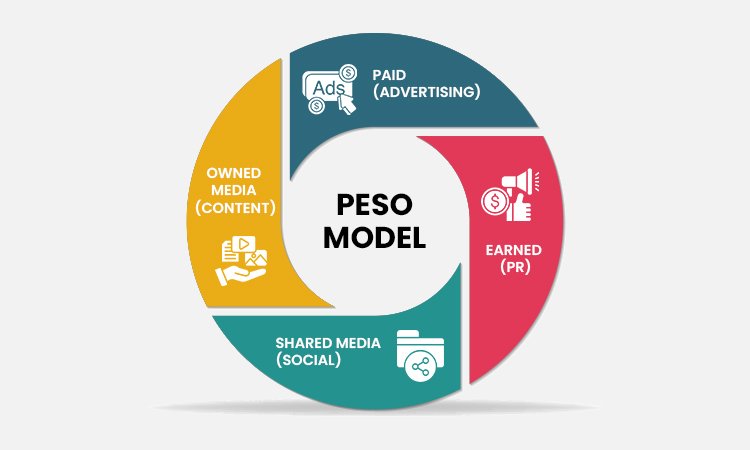
The PESO model serves as a framework to integrate communication channels, ensuring PR and advertising work together rather than in silos.
- Paid (Advertising)
In contrast to the broader discipline of PR vs advertising, paid media includes paying for a placement, such as postponed content, programmatic advertising, and social media ads.
Strategy to Implement: Brands must leverage paid media to boost best-performing content and target strategic audiences, rather than using it as a substitute for quality content.
Application: A popular blog post or high-performing social media post can be amplified through paid promotion to reach a wider audience. This can help brands drive targeted traffic to the owned content, improving the overall impact of the campaign.
- Earned (PR)
This secures media coverage, journalist mentions, guest articles, and expert endorsements to establish third-party credibility.
Strategy to Implement: The best way to implement this is by pitching insights from your owned content to journalists and industry influencers.
Application: By taking crucial statistics or trends from your owned research report and pitching them to industry publications for media coverage. This establishes credibility and builds backlinks, which are crucial for AI search visibility.
- Shared Media (Social)
Shared media includes social media platforms, communities, and user-generated content, such as LinkedIn, TikTok, forums, and Instagram.
Strategy to Implement: Leverage social media marketing for engagement rather than just promotion.
Application: Brands must break down the core “Owned” content into easily digestible pieces, such as an Instagram carousel, short video, or LinkedIn thread, to encourage community discussion and engagement.
- Owned Media (Content)
Owned media is the content you control. This includes email lists, blog posts, research reports, and websites.
Strategy to Implement: Brands can incorporate this strategy by creating high-quality, credible, and data-driven content.
Application: By developing long-form content, such as a whitepaper or in-depth blog posts, brands can ensure they serve as an “anchor” for a campaign. This type of content must solely focus on solving specific problems of the customers, positioning their brand as a thought leader.
- Build a Unified Narrative

A unified narrative guarantees consistent messaging across various formats, fortifying brand recognition. Although the debate of PR vs advertising keeps getting heated up, developing a unified message can be very effective for integrating public relations and advertising.
Here’s a step-by-step guide brands should follow to develop a unified narrative:
- Define the Core Foundation
- Create a Master Narrative: Brands must develop a single, overarching theme- a “north star” that essentially ties together the purpose and unique value proposition of a company.
- Determine Core Values and Mission: Brand owners must clearly define what their brand stands for. This is the core of authenticity.
- Address the Customer as “Hero”: Make sure to develop a narrative around the challenges and aspirations of the customers. This will help them position the brand as an effective guide that can help them achieve success.
- Articulate the “Why”: Rather than simply focusing on what they are selling, brands must focus on why it exists and how their products can benefit customers.
- Guarantee Internal Alignment
- Cross-Functional Collaboration: Brands must bring together HR, sales, public relations, marketing, and product teams to make sure everyone shares, understands, and contributes to the same message.
- Internal Education: By offering proper training to employees on the same brand’s story to encourage them to reflect it in customer interactions.
- Develop a Relevant Messaging Framework: Make sure to formalize the brand narrative, tone of the voice, and core messaging into a master document that acts as a reference for every team member.
- Maintain Consistency Externally
- Consistency Across Channels: It is important to make sure that the same narrative and visual identity, such as logos, colours, and tone, are present on the website, social media, customer support, and advertisements.
- Leverage Data-Driven Insights: By thoroughly researching the market, brands can understand what aligns best with their audiences, making the narrative even more compelling and targeted.
- Applying the “One Message, 1000 Ways” Rule: Personalizing the message for different platforms, including short forms for social media, and in-depth for blogs, without changing the main story, can be very effective.
- Maintain and Modify the Narrative
- Regular Alignment Reviews: By reviewing the brand story regularly, brands can make sure it has not drifted as markets and products evolve.
- Monitor Impact: Brands must make sure to keep a check on whether or not emotional connections remain strong across all channels.
- Maintain Authenticity: It is very important to understand and make sure that your actions perfectly align with your brand message in order to foster trust, as inconsistency might lead to a severe loss in credibility.
- Leverage PR to Build Credibility for Advertising Campaigns

When the discussion is about PR vs advertising for establishing credibility, Public relations can build the reputation of a brand that no advertising budget can match.
Here are some key tactics for integrating public relations and advertising campaigns:
- Consider Securing Third-Party Validation: Before launching paid ads, brands must create a buzz through earned media, such as articles in reputable publications, to validate their product or service, making the subsequent advertising more authentic.
- Leverage Storytelling Over Slogans: Rather than writing flashy and promotional ad copies, brands must develop genuine narratives such as behind-the-scenes content, founder journeys, or community impact stories.
- Build Thought Leadership: Make sure to create bylined articles, guest posts, and whitepapers for industry publications. This can help position your brand’s leaders as experts, establishing trust that elevates advertising efforts.
- Collaborate with Influencers: By collaborating with influencers or industry experts who can provide honest reviews and feedback, brands can achieve peer-level validation that ads alone cannot achieve.
- Repurpose Earned Media: Brands must leverage media mentions, expert reviews, and press coverage within paid advertising creatives to strengthen credibility.
- Maintain Consistency in Messaging: You must make sure that all advertising messages and PR narratives are consistent across all channels, including press releases, social media, and websites, in order to establish a strong brand image.
- Engage With Influencers and Media Outlets

Partnering with influencers and media outlets is a great way to bridge the gap between earned, shared, and paid media.
- Influencer Relations as PR: By treating influencer marketing as a part of your broader PR strategy, brands can foster trust and authenticity.
- “Digital PR” Through Influencers: Collaborating with creators to develop authentic, non-promotional content that tells the story of your brand, brand owners can boost this story with paid spend to ensure higher visibility and reach.
- Combine Efforts: Businesses can leverage public relations to pitch influencers for interviews and then implement ad campaigns to promote the positive reviews of the influencers.
- Measure Cross-Channel Impact

Instead of solely tracking PR and advertising metrics separately, brands must track the combined impact on business outcomes.
- Message Pull-Throughs: Make sure to clearly measure whether or not their brand values from PR are clearly reflected in the engagement on your paid ads.
- Impact Metrics: Make sure to monitor detailed metrics such as website traffic, search engine optimization gains through backlinks, lead generation, and overall brand sentiment.
- Monitor Authority Growth: By leveraging tools like CisionOne and Meltwater to track if increased media coverage corresponds to higher click-through rates on paid ads.
5 Common Mistakes of Public Relations and Advertising and How to Avoid Them
Here are some of the major mistakes of PR vs advertising that businesses must consider:
| Public Relations | Advertising Mistakes |
| Mistake 1: A lot of business firms conduct “random acts of PR” without having a well-defined plan in hand or clear objectives in mind. How to Avoid It? Brands must develop a strategic public relations plan that perfectly aligns with their overall business goals. Clearly define what success looks like for your business. Is it increased brand awareness, website traffic, or lead generation? | Mistake 1: One of the biggest advertising mistakes that brands make is targeting the wrong audience or targeting a broader audience. Trying to appeal to everyone can not only waste your budget but also weaken your message. How to Avoid It? By researching audiences thoroughly and creating detailed buyer personas based on demographics, interests, and behaviours of your target audiences, you can ensure your advertisement reaches the right audience. |
| Mistake 2: Developing generic press releases and blasting journalists and news outlets who do not cover your industry with them is one of the major PR mistakes. It not only wastes time but also damages credibility. How to Avoid It? Before sending press releases, brands must thoroughly research journalists and media outlets to identify their interests and preferences. Personalize your message so that it aligns with the topics they cover and provides value to readers. | Mistake 2: Trying to say too much is another major advertising mistake that brands often make. Overloading ads with too much information not only suppresses the main message but also confuses audiences. How to Avoid It? When developing ad campaigns, business owners must focus on one hero message per ad. Clearly highlight the main benefit or product rather than covering the entire history of the company. |
| Mistake 3: Failing to measure the impact of your PR efforts can make it almost impossible to determine what is working, leading to wasting funds on ineffective strategies. How to Avoid It? Brands must invest in analytical tools to track the outcomes of their PR efforts beyond just “media impressions.” Consider tracking metrics like website referral traffic, social media engagement, and sentiment analysis to determine your actual impact. | Mistake 3: Launching an ad campaign and not keeping track of how it is performing, or ignoring the data, basically leads to wasted ad budget. How to Avoid It? Make sure to monitor key advertising metrics such as CTR, ROI, and cost per acquisition regularly. By using A/B testing in order to test different headlines, audiences, and visuals, brands can determine what is working the best. |
| Mistake 4: Treating public relations solely as a broadcast mechanism, not addressing the audience’s feedback, can lead to tone-deaf messaging and missed opportunities for engagement. How to Avoid It? Make sure to actively monitor audience feedback on social media and other platforms. Brands must engage in conversations, respond to customer feedback, and leverage insights from their audiences in order to develop their PR initiatives. | Mistake 4: Do you know that paid mobile ads on YouTube are 84% likely to receive more attention than TV advertising? Often, brands create ad campaigns that appear great on desktops but are not well-optimized for mobile devices and load slowly. However, developing a mobile-friendly ad campaign in 2026 is non-negotiable. How to Avoid It? Rather than developing ads that perform the best on desktop, brands must focus on mobile-first design. Keep video ads short and use minimal text. This will ensure that landing pages are loading instantly on mobile devices. |
| Mistake 5: If a brand uses different voices or shares inconsistent information across press releases, social media, and your website, it can not only damage credibility but also leave your audiences overwhelmed. How to Avoid It? Business owners must make sure that their main message and brand voice remain consistent across all platforms. Make sure to develop a solid, unified message that gets reflected directly in your external and internal communications. | Mistake 5: Using blurry, low-resolution, or stock images that do not reflect the value of your products or services in your ad campaign is one of the major mistakes that brands make. How to Avoid It? Brands must invest in high-quality, authentic images that clearly showcase their products and evoke the desired emotions among the audience. You can leverage tools like Canva for design. |
Conclusion
When discussing PR vs advertising, the answer is not about choosing one over the other; rather, it is about balancing both strategies equally to achieve better outcomes. Advertising brings instant results, consistency, and measurable results to the table, while public relations focuses on building trust, establishing authority, and long-term partnerships.
This blog has covered the benefits of PR and advertising, key differences between the two strategies, and how brands can integrate PR and advertising together into their marketing strategy. In case you are looking to get started with public relations, then you can consider partnering with a specialized PR agency offering comprehensive PR solutions.
FAQs
Ans. Yes, public relations is usually considered more credible than advertising. According to statistics, PR is almost 90% more effective than advertising. This is because PR earns credibility through third-party validation from journalists and influencers. On the other hand, advertising is often viewed as a paid, subjective promotion.
Ans. Although the debate of PR vs advertising keeps getting heated up, there is a positive side to merging these two strategies. Public relations supports advertising ROI by establishing credibility, trust, and brand awareness, making customers more responsive to promotional messages. Unlike the direct promotion feature of advertising, PR focuses on securing earned media that boosts brand familiarity, minimizing the cost of customer acquisition, and maximizing the effectiveness of advertising campaigns.
Ans. Yes, public relations, especially digital PR, has a significant positive effect on SEO ROI by building high-quality links, boosting brand authority, and generating referral traffic. While traditional PR is more likely to enhance offline visibility, modern PR directly influences search engine rankings by securing placements in authoritative websites, which acts as a trust factor for search engines.
Ans. No, the ROI of PR campaigns cannot be measured with the same precision and granularity as PPC advertising. This is because PPC offers direct, instant attribution while public relations focuses on brand awareness and reputation, which are very difficult to measure.
Ans. Using AI to measure the ROI of public relations and advertising campaigns includes moving beyond vanity metrics like impressions to monitor revenue, cost savings, and behavioural changes. Some of the best strategies include incorporating AI for predictive analysis to forecast campaign performance and automated sentiment analysis to track brand lift.
