
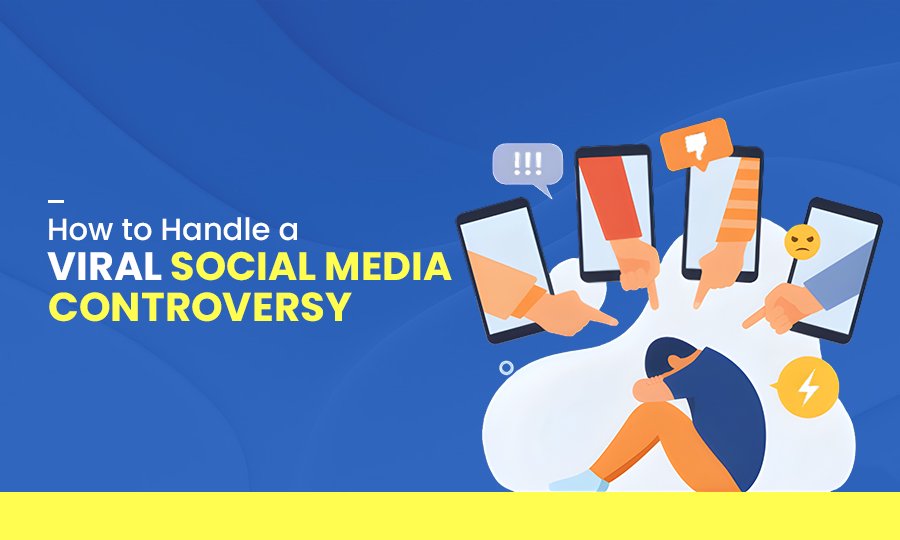
Nowadays, on social media, there is not much room left for error. All it takes is an individual to find a slight mistake in a brand’s message. Do you know that almost 4.8 billion people globally are using social media platforms to engage with other people worldwide? Even a single social media post or comment can spark a massive social media controversy within just a few minutes.
Social media controversies can arise unpredictably. From celebrities, large-scale or small-scale businesses, or regular individuals, it can strike anyone.
But how do you handle these situations like a pro? In this blog, we will discover the impacts of social media controversies on a business or an individual’s reputation, factors that can trigger an online controversy, how to handle them, major mistakes to avoid, and more. So, let’s dive into it.
How Can Social Media Controversies Affect the Reputation of a Business or Individual?
Social media controversies can severely damage the reputation of a brand and an individual. How? Let’s take a look:
- Consequences of Social Media Controversies for Businesses
- Eroding Customer Trust and Brand Value: Trust is one of the most fragile things. A trust that took years to build and it can break down into pieces due to a small mistake. Negative, viral content can severely destroy customer trust within just a few minutes. A poor social media reputation often leads to lower brand loyalty, reduced brand equity, and a significant drop in sales.
- Loss of Customers and Financial Impact: Negative reviews and backlash from customers can drive potential customers away from your business, making them choose your competitors over you. In severe cases, social media controversies might lead to lower stock prices, loss of investor trust, and loss of shareholder value.
- Recruitment Challenges: No one would want to engage with a brand that is highly criticized online. This discourages skilled professionals from joining your company.
- Operational Disruption: Severe controversies can force companies to pause their operations, issue public apologies, or seek expensive crisis management services. For example, Zomato’s 2017 social media controversy involving running an offensive advertising campaign made them come out and issue a public apology.
- Consequences of Social Media Controversies for Individuals
- Loss of Sponsorships and Income: For influencers and public figures, scandals often lead to an instant loss of partnership opportunities and sponsorships. For example, the Kanye West controversy, in which he made antisemitic comments, made him lose major brand deals from Balenciaga and Adidas.
- Loss of Job and Career Damage: Employees can face termination owing to social media activity that violates the company’s code of conduct. For example, the Gina Carano controversy led to her getting fired from “The Mandalorian.”
- Long-Term “Digital Footprint” Damage: Negative comments, controversial posts, or inappropriate content often remain accessible for a very long time, even after the incident, leaving a long-term impact and severely affecting future professional opportunities.
- Impact on Mental Health: Individuals often experience intense online hate, trolling, and bullying from audiences due to a controversy. This can negatively affect the mental health of individuals.
4 Factors That Can Trigger a Social Media Controversy
Social media controversies can erupt due to multiple reasons. In this section of the blog, we have discussed some of the major reasons why social media controversies arise:
- Controversial or Offensive Content
This includes posting material that violates societal norms, promotes hate speech, and cultural sensitivity, leading to instant backlash from the public. This type of controversy can often arise from sharing racist comments, derogatory jokes, and running offensive advertisements.
Example: The controversy of Burger King UK sparked massive outrage in 2021 following their tweet, “Women belong in the kitchen,” which was intended to promote a scholarship program but miserably failed to convey the right message due to the highly offensive hook.
- Sharing Misinformation
In the digital-first world, the rapid spread of false, fabricated, and inappropriate information on social media has become commonplace. People share false healthcare tips, information, and fake stories just to engage audiences. However, this might lead to panic, damaged reputation, and financial losses.
Spreading false news, health misinformation, or fabricated political news can lead to the eruption of severe controversies.
Example: PepsiCo’s stock fell significantly in 2016 due to a fake news story that falsely accused the CEO of PepsiCo of telling the supporters of a specific political candidate to “take their business elsewhere.”
- Misbehaviour or Ethical Issues
This category of controversy covers actions that strongly violate community guidelines or ethical standards, such as cyberbullying, online harassment, trolling, discrimination, or brands engaging in sexist or biased practices.
Example: The “#YourTaxis” campaign from the Victorian Taxi Association was seized by users sharing negative experiences, turning a marketing campaign into a demonstration of poor service.
- Privacy or Data Misuse
Generally, controversies arise when companies or employees mishandle personal data, engage in unauthorized surveillance, and violate user privacy. So, this type of controversy can get triggered by data breaches, leveraging confidential data for invasive tracking, and selling user data without consent.
Example: Recently, in 2023, Facebook Meta was fined $1.2 billion euros by EU regulations for infringing privacy and by transferring user data to the U.S servers.
A Comprehensive Guide for Businesses and Individuals on Handling Social Media Controversies
Dealing with a controversial situation can be quite overwhelming. Here are some of the effective steps to manage viral social media controversies:
Step 1: Stay Calm and Assess the Situation

First things first, when a controversial situation arises, businesses or individuals must not get overwhelmed; they must stay calm.
Before you comment on any internal or public statement, take the initiative to assess the situation. Start by documenting the details of the situation. This will help businesses or individuals visualize everything that has happened and offer a clear reference to your team.
In such cases, brands and individuals must think like a reporter and transparently answer these questions:
- Who was involved in the initial controversy situation? And who has been involved since?
- What happened? Think like a detective and provide “just the facts.”
- Where did the initial controversy take place? Was it on a particular social media platform or a walk-in store?
- When did the controversial situation arise? Make sure to be as specific as possible, since hours and minutes matter a lot in these cases.
- Why did the controversial situation arise? Was it actually dissatisfied customers sharing their negative experiences on social media? Or did anyone from the marketing team accidentally share an inappropriate tweet?
Step 2: Assemble your Crisis Management Team

In cases of social media controversies, having a well-defined social media controversy management plan and team is non-negotiable. Your crisis team must consist of individuals from various departments, including legal, public relations, social media, and human resources.
Each team member must have an assigned role, such as:
- Social Media Manager: Tracks online activity and handles all communications on various social media sites.
- Public Relations Expert: Must handle all media inquiries and create official statements.
- Legal Advisor: Offers legal advice and opinions on actions and communications.
- HR Representative: Provides advice on internal communications and employee-related matters.
- Executive Leader: Makes the final decisions on how the company should respond and act.
Once you have a solid crisis management team ready, it is time to act.
Step 3: Develop a Thoughtful Public Response Strategy

Now that you have an established team in place, it is time to develop a solid response strategy.
An effective public response strategy must cover these crucial areas:
- Triage: What is your first move? Will you delete the initial post? Do you share a quick acknowledgement before a complete response?
- Main Messaging: What will you say? This includes explaining what exactly happened, what you are going to do about it, and what people can expect next.
- Channels: Where will you communicate? Think major social media sites, emails, and other channels that actually make sense.
- Training: Who needs to be looped in? Make sure customer-facing staff are well-trained to handle the situation effectively.
- Incoming Messages: How will you handle direct messages, emails, and social media comments?
- Tracking: Which platforms and media sources will you continue to track during and after the controversy?
Step 4: Acknowledge the Issue Instantly

Brands or individuals must acknowledge the issue instantly. Apologize to the victims if necessary and show genuine concern for the affected parties.
Here’s how businesses and individuals can instantly acknowledge social media controversies:
- Issue the Instant “Holding Statement”
Even if you do not have all the facts and figures, brands and individuals must genuinely acknowledge the issue instantly to show the audience that you are not ignoring it.
- Acknowledge Awareness: Post a clear message stating, “We are aware of the concerns/issues regarding the [topic], and we are currently investigating it.”
- Stop Posting Scheduled Content: When a controversy arises, brands and individuals must immediately pause all the automated or scheduled social media posts in order to avoid appearing tone-deaf.
- Be Human, Not Corporate: Make sure to avoid generic, robotic jargon. A sincere response with a proper human touch can work the best to defuse tension.
- Best Practices for Responding
- Respond Within 1-4 hours: Speed is the key when it comes to crises or controversies. Nowadays, audiences expect a reply to a crisis within just 1 to 4 hours; the sooner, the better.
- Apologize Sincerely: Make sure to own the mistake directly. An immediate, sincere apology is the most effective way to stop the spread of negativity.
- Show Empathy: In cases of controversies, businesses must clearly acknowledge the frustration of the audiences rather than invalidating their emotions.
- Avoid Getting Defensive: Brands and individuals must avoid making excuses or blaming external factors for a controversy. Staying professional, calm, and transparent is the key to dealing with social media controversies effectively.
- Contain the Controversy
- Move to Private Channels: Once you are done publicly acknowledging the issue, you should invite users to continue the conversation through direct message, email, or phone, especially in cases of sensitive data.
- Make Use of Pinned Posts: In case the controversy is widespread, brands and individuals must pin a statement to the top of their profile that explains their position and provide a relevant link to a complete, updated response.
- Do Not Delete: By deleting, hiding, or ignoring comments, brands and individuals can make it seem as though they are covering up the problem.
- Long-Term Resolution
- Develop a Clear Plan of Action: Brands and individuals must create a solid plan of action to tell their audience how they will solve the issue and not just why it happened.
- Learn and Adapt: Make sure to leverage feedback to fix underlying issues at the source.
- Track and Refine: You must check back periodically with progress updates, even if the problem is not entirely resolved.
Step 5: Apologize Sincerely to the Victims

When a mistake has occurred, providing a prompt and genuine apology is a must.
Here’s how brands and individuals can apologize sincerely to the victims during social media controversies:
- Act Quickly and Directly
- Rather than waiting for too long, brands and individuals must act instantly. Delaying allows anger to grow, making an apology look like forced surrender rather than genuine remorse.
- Brands and individuals must name the specific mistake. Make sure to avoid vague phrases like “we messed up” or “mistakes were made.”
- Make sure to apologize when the controversy has occurred. This may require a social media post or direct communication with the affected party.
- Take Complete Responsibility
- The most common mistake a brand or individual can make during social media controversies is saying, “We are sorry if you are offended.” This type of sentence completely shifts the blame to the victim’s reaction rather than the action itself.
- Make sure to own the behaviour entirely. Say, “We made a mistake” or “I was wrong” rather than “We are sorry that you felt this way”.
- Clearly show that you understand the embarrassment, pain, or harm that your actions caused and validate those feelings rather than downplaying them.
- Offer Effective Repair Solutions
- Actions speak louder than words. An apology must clearly include clearly conveying steps to fix the damage.
- Offering compensation can be a great idea. Provide free products, refunds, and donations to relevant causes.
- Brands must change their policies and explain the specific actions that are being taken in order to avoid future occurrences, such as bias training or updating content policies.
- Make sure to show tangible evidence of improvement and not just empty promises.
- Engage and Deliver Directly
- You should apologize right where the mistake happened. If the controversy emerged for sharing an inappropriate post on Twitter, then brands and individuals must apologize on Twitter.
- For major controversies, the CEO or individual should come up and deliver the apology message personally, and not just through their public relations team.
- Deleting posts can appear suspicious and look like a cover-up. Instead of deleting a post, consider pinning the apology over the offensive post or addressing it directly.
- By responding to comments and messages, brands and messages can show that they care about their audience’s pain rather than hiding from the conversation.
Step 6: Strategically Engage with your Audiences

Engaging with your audiences strategically during social media controversies matters a lot, as it can shift a brand or individual from a passive recipient of backlash to an active manager of their reputation. This can allow to successfully mitigate damage, control of the narrative, and reestablishment of trust. Rather than simply reacting, a strategic approach often leverages two-way communication to foster empathy, transparency, and ensure timely resolution.
Here is a step-by-step guide on how brands and individuals can engage with their audiences effectively during social media controversies:
- Act Quickly and Thoughtfully
- As we discussed before, acknowledging the issue immediately can be very effective in case of social media controversies. Silence is often seen as guilt or ignorance of the issue. This can heavily escalate the controversial situation. Make sure to acknowledge the issue quickly, even if you do not have all the answers yet. This shows that you are attentive and take concerns seriously.
- Make sure to respond within hours, not days. Aim for at least 4 hours to stop the spread of misinformation.
- Focus on Transparency and Authenticity
- When a social media controversy arises because of your mistake, make sure to take accountability for your actions openly and honestly.
- Instead of generic corporate jargon, brands and individuals must make use of a human-like, empathetic tone that corresponds to the affected audience and not just stakeholders.
- Clearly explain to your audiences, “why” and “how” the controversy emerged and outline specific actionable steps to resolve the issue and avoid future occurrences.
- Leverage Strategic Communication Approaches
- Brands and individuals can leverage effective monitoring tools such as Brandwatch or SproutSocial to monitor sentiments and determine the loudest voices in the conversation in order to target outreach successfully.
- In case of any queries, respond to audiences through direct messages or comments to show that they are being heard. This can increase the likelihood of turning the critics into advocates.
- Focus on Rebuilding Trust After the Controversy
- Brands and individuals must make sure that every promise they are making regarding policy changes or corrective measures is fulfilled and reported back to the public.
- By reinforcing brand values through action-based, genuine content rather than simply messaging is crucial for re-establishing trust after a controversy hits.
- Leveraging user-generated content can be very effective for building trust. Encourage positive community engagement to suppress the negative narrative with real customer experiences.
Step 7: Avoid Over-Responding

Avoid Over-responding to comments, posts, and direct messages on social media is crucial for preventing the situation from escalating and damaging your brand’s and personal reputation.
Here are some of the best strategies brands and individuals must leverage to avoid overresponding to audiences:
- Pause and Take the Conversation Offline
- Do Not Rush to Respond: Before you respond to audiences online during the heated controversy, you need to take a deep breath.
- Move to Private Channels: If a specific user is persistent, you can consider moving the communication to direct messages, phone, or email to prevent public escalation.
- Acknowledge Publicly, Solve Privately: Brands and individuals can leverage public channels to say, “We are aware and looking into this”, and immediately move the conversation to a private communication channel.
- Strategically Leverage “Non-Engagement”
- Do Not “Feed the Trolls”: Nowadays, in social media, hostile and anonymous critics often gain a lot of attention. Responding to them instead of ignoring them can be a bad idea, as it can fuel further negativity and enhance their visibility in the search engine results.
- Limit Responses: If everyone wants the last word, then the discussion will never end. Rather than continuing to respond, respond once or twice and then stop.
- Leverage Block/Mute Functions: Rather than arguing with offenders, you can block or mute toxic offenders.
- Develop a Minimal Response
- One and Done: Brands and individuals must make a statement once, clearly, and sincerely, and do not continue to justify your actions in the comments.
- Avoid Using Overly Generic Phrases: Make sure to avoid using robotic, canned, or overly corporate apologies, which can escalate the situation. For example, “we apologize for the inconvenience.”
- Adhere to the “3 Sentence” Rule: Keeping your replies simple, short, and clear (ideally under 3 sentences) in cases of social media controversy can be very effective.
Step 8: Take Corrective Measures

One of the major strategies to handle social media controversies is to take corrective action during the controversy, as it can directly influence the perception of the public, stop the spread of misinformation, and protect long-term brand equity.
Here are some of the major reasons why taking corrective measures matters after a social media crisis:
- Rebuilds Trust and Accountability: Taking responsibility, apologizing sincerely, and clearly outlining steps to fix the issue often indicates that a brand cares about its audience. This can transform negative sentiment into positive brand perception.
- Limits Damage and Shapes the Narratives: Social media crises can escalate pretty quickly. Just a few comments and boom- it becomes viral. Immediate actions, such as running a campaign, issuing a statement, or correcting misinformation, often prevent the narrative from being shaped completely differently by critics or third parties.
- Prevents Escalation: Deleting comments and ignoring the controversy rarely works, causing the issue to escalate. By immediately addressing the main issue, brands and individuals can ensure that they are listening. This reduces the need for audiences to escalate the issue in order to be heard.
- Eliminate Long-Term and Financial Losses: A poorly managed crisis can lead to a significant drop in the market value as well as a major loss of customers. Clearly outlining the measures you will take to address the issue caused, brands and individuals can foster trust among their audiences.
- Satisfies Audience Expectations: Modern-day customers look for transparency and authenticity. When a brand or individual admits to a mistake that they have made and offers a relevant solution, it indicates an “audience-focused” approach, helping to maintain audience loyalty even during a controversy.
- Prevents Similar Future Controversies: Following a controversy, conducting a post-controversy review can allow brands to learn from their mistakes, fortify their digital security and communication strategies, and adjust internal policies.
Step 9: Track Closely and Respond to Audience Feedback

Even after releasing a public response and statement on corrective measures, your work is not done. You need to keep listening and responding to various queries after the situation unfolds.
Brands and individuals must closely track the changes in public sentiment by leveraging social listening tools. By tracking these insights, you will get a clear idea of the shifts in the tone and refine your message if required.
This can help brands and individuals better understand what people are actually saying about them, and not the way you hope they are.
Here are a few ways in which brands and individuals can track and respond to their audience’s feedback:
- Leverage Social Listening Tools: By implementing tools like SproutSocial, Brandwatch, and Hootsuite, brands and individuals can easily identify spikes in volumes, hashtag campaigns, and negative sentiment clusters.
- Set Up Specific Alerts: Brands and individuals must regularly track brand names, misspellings, the CEO’s name, and “canary” keywords that are combined with negative sentiment.
- Determine Influential Amplifiers: Make sure to track when journalists, high-reach accounts, or influencers complain so that you can act before the controversy gets out of hand.
- Develop a Digital “War Room”: This is very effective in case of a social media controversy. You can consider developing a central, real-time dashboard to track all sentiments and mentions trends across platforms.
- Leverage the ACE Framework: The ACE framework is crucial when it comes to social media controversies. A (Acknowledging the issue), C (Communicating regular updates), E (Execute and fix).
- Implement Modern Tracking Tools: Brands and individuals can leverage tools like Brand24 and SproutSocial that can help them determine sudden negative activities. Tools like Talkwaker and Sprinklr can be used for monitoring deep sentiment across more than 30 channels, and Buffer to track basic social media feedback.
5 Common Mistakes to Avoid While Handling Social Media Controversies
Here are 5 major mistakes to avoid when handling a social media crisis and how brands and individuals can avoid them:
- Ignoring the Primary Issue
The biggest mistake a brand or individual can make when handling social media controversies is to pretend that the controversy is not happening or to hope it will go away on its own. Remember, silence is often interpreted as guilt, arrogance, and indifference, which can severely escalate the situation.
What to do Instead?
Brands or individuals must acknowledge the issue immediately, ideally within 20 to 60 minutes, to show that you are listening.
- Deleting Content Without Proper Explanation
Another major mistake that a lot of brands and public figures make is to delete comments or posts amid a controversy without any explanation. Deleting videos, posts, or comments without proper explanation usually triggers the “Streisand Effect.” This can make your content even more viral, as people take screenshots and accuse you of covering up the truth.
What to do Instead?
If you think of removing a post because it is offensive or inappropriate, simply replace it with a proper explanation and a heartfelt apology for the post. Brands or individuals can also consider editing the original post to showcase transparency.
- Being Defensive Despite Being Wrong
Using a condescending tone, arguing back, or trying to prove the audience wrong when you are clearly in the wrong can escalate a social media controversy. This is because it makes an individual or brand seem immature and argumentative.
What to do Instead?
Brands and individuals who are dealing with a social media crisis must step back and understand the human element behind the anger. Respond to comments professionally, calmly, and focus on solving the issue rather than winning the argument.
- Blaming Others for Your Fault
Rather than throwing interns, employees, or marketing agencies under the bus, take accountability for your mistakes. Audiences often view this as a lack of responsibility and leadership.
What to do Instead?
“The buck stops here.” Take accountability for your mistakes as an organization or individual. Even if a third party was involved in the emergence of a social media crisis, acknowledge it as your responsibility to manage your social media presence.
- Issuing Insincere Apologies
Using non-apologies like “We are sorry you feel that way” or “We are sorry if you are offended” often shifts the blame back to the victim, making the situation even worse.
What to do Instead?
A sincere apology must be specific, take complete responsibility, show empathy, and include solid measures for how you will fix the issue and prevent it from happening further.
How can Businesses and Individuals Measure the Impact of Social Media Controversies?
Measuring the impact of social media controversies is a must as it directly affects the financial stability, brand’s reputation, and long-term customer trust.
Social media controversies can escalate from minor hiccups to a full-blown crisis in just a matter of hours. So, acting quickly is vital for preventing, mitigating, and managing significant damage.
Here are some of the most important metrics and methodologies that need to be considered in order to measure the impact of a social media controversy:
- Sentiment Analysis
Sentiment analysis includes leveraging AI and natural language processing to categorise social media mentions as negative, positive, and neutral. Keeping track of these shifts can help brands and individuals to determine real-time spikes in negative sentiment that often signal an escalating crisis.
- Engagement Metrics
This includes measuring interactions such as shares, likes, comments, and saves. These insights offer quantitative data on how far a controversy is spreading. An abrupt drop in engagement or an increase in negative interactions can showcase how deeply the issue aligns with the audience.
- Brand Perception
Tracking brand perception is one of the most important metrics, which focuses on long-term health and is measured through brand tracking surveys, share of voice, and focus groups. Monitoring these indicators can help brands and individuals easily determine whether or not a controversy has caused long-lasting damage to brand loyalty or shifted how the common public views your brand.
- Social Share of Voice (SSoV)
Comparing the volume of conversations about you or your brand against competitors during a controversial situation reveals whether your brand is dominating the industry conversation for the wrong reasons.
FAQs
Ans Businesses should respond to public complaints and controversies immediately, within one to hour on social media, before it escalates, in order to prevent the controversy narrative from spinning out of control.
Ans Deleting negative comments or posts during controversies is generally not considered a good decision and can severely affect online reputation. Although the instinct of eliminating negative content is strong during these situations, this approach can often signal that a brand or individual is dishonest and unprofessional.
Ans The initial steps you take during social media controversies are crucial. A faster, calmer, and well-prepared response can prevent a minor issue from turning into a full-scale crisis.
Ans The recovery time from a social media crisis widely varies, ranging from just a few weeks to over a year, depending on the severity of the crisis situation, authenticity of the apology, and time of response.
Ans Multiple social media monitoring tools can help brands and individuals determine, track, and manage controversy situations like a pro. Tools such as SproutSocial, Brandwatch, and Hootsuite offer advanced features such as AI-driven sentiment analysis, comprehensive dashboards to successfully track hashtag performance across various platforms, and instant alerts for comments and mentions.
Ans A public relations agency can immensely help businesses and individuals to successfully navigate social media controversies by turning chaotic, fast-moving backlash into a well-managed, strategic response.
Ans Businesses must aim to release a statement regarding a controversy as soon as possible, usually within the first one to two hours of a crisis breaking out, to maintain control over the narrative.
Conclusion
Handling social media controversies effectively requires a combination of speed, sincerity, and strategic actions rather than simply passive observation.
By following the strategies mentioned above, brands and individuals can not only foster a positive brand reputation but also maintain customer trust and ensure long-term business success. However, when dealing with a social media controversy, brands and individuals must avoid the common mistakes mentioned above. If you or your company is facing a social media controversy, you can seek professional social media management services from a reliable agency.
